How to Streamline Thailand's Import/Export and Customs Operations with AI — Automating HS Code Classification, ASEAN Certificate of Origin, and Thailand AEO Compliance

Lead
This article is a practical guide for managers, customs clearance personnel, and logistics managers at Japanese companies engaged in import/export operations in Thailand, covering how to streamline customs clearance operations using AI. In January 2026, Thailand's customs system simultaneously implemented three major reforms: the complete abolition of the de minimis duty exemption, the mandatory adoption of electronic customs clearance (e-Customs), and the tightening of HS code accuracy requirements. These changes have sharply increased the operational burden and compliance risks on the ground. Errors in HS code classification can trigger additional tax assessments, customs clearance delays, and customs audits, and there are growing situations where manual processes alone cannot keep up. This article systematically explains what can be automated with AI and to what extent across specific operational areas—including HS code classification, ASEAN certificates of origin, Thailand AEO compliance, and declaration cross-checking—along with industry-specific use cases, estimated implementation costs and ROI, and failure patterns and countermeasures identified through our own PoC. The article is structured so that readers come away with a clear framework for deciding "when, where, and what to start with" to achieve realistic ROI within their own organization.
The benefits that companies engaged in import/export in Thailand can gain by introducing AI into their customs clearance operations go beyond simple reductions in processing time. The business impact manifests in three areas: "increased processing capacity," "stabilized classification accuracy," and "reduced audit response costs." These three factors are interconnected, and they affect both the P&L and balance sheet in the form of reduced overtime during peak periods, lower training costs, and decreased risk of additional tax assessments. This chapter organizes these three perspectives based on field interviews and PoC results.
Doubling Throughput — Automating Declaration Data Preprocessing
The most time-consuming part of customs clearance operations is the pre-processing stage, which involves extracting item information from invoices, packing lists, and sales contracts, and transcribing it into each field of the declaration system. For a single person working in a primarily manual setup, a realistic upper limit is 30 to 50 declarations per day. By combining AI-OCR with large language models, it becomes possible to automatically extract product names, quantities, unit prices, countries of origin, and INCOTERMS from documents received as PDFs or images, and convert them into structured data that can be passed to the declaration system. In our PoC, the time required for the pre-processing stage was reduced by approximately 70%, and the number of declarations that could be handled by the same number of staff more than doubled. Raising the throughput ceiling not only reduces overtime and outsourcing costs during peak periods, but also builds organizational resilience to handle sudden increases in workload. Furthermore, by mechanizing the pre-processing stage, human staff can reallocate their time to judgment-based tasks such as finalizing HS codes, proposing tariff optimization strategies, and handling customs inquiries.
Stabilizing Classification Accuracy — Eliminating Dependency on Individual Staff
HS code classification is a task that relies heavily on the experience of veteran customs specialists, and it is not uncommon for judgments to differ depending on the person handling the case. Even for the same electronic component, whether it is classified under "electrical machinery" or "parts and accessories" affects the tariff rate, and in some cases this can result in a difference of several million yen on an annual basis. By training on past finalized declaration data, AI classification models can present candidate HS codes aligned with internal standards with high reproducibility. The key point is not that "the AI makes the final determination," but rather that "the AI uniformly prepares the decision-making materials for humans to make the final determination." Because even new staff can access the same level of background information as veterans, this simultaneously reduces training costs and increases resilience against the risk of staff turnover. The ability to facilitate staff rotation and significantly reduce the risk of over-reliance on specific individuals represents substantial management value in an environment where securing talent is increasingly difficult.
Audit-Ready Documentation — Ensuring Explainability
In Thailand Customs' Post-Clearance Audit, it is necessary to retroactively explain the basis for HS code classifications in past declarations. Relying on staff memory or verbal handovers makes it virtually impossible to reconstruct the rationale behind a declaration made five years ago. When using an AI classification model, it is possible to retain complete logs of all inputs—including the item information entered, past cases referenced, candidate codes and confidence scores presented by the model, and comments from human reviewers. During an audit, the decision-making process behind "why that HS code was selected" can be reproduced in written form, which has the effect of mitigating both the risk of additional tax assessments and reputational risk. Particularly for high-value or ongoing cases, a high degree of explainability directly translates into reduced assessment risk, allowing the ROI of AI implementation to be evaluated from the perspective of a risk mitigation premium.
Overview of Thailand's 2026 Customs Reform — What's Changing

In January 2026, Thailand's Ministry of Finance and Customs Department simultaneously implemented a sweeping overhaul of the customs clearance system. Below, we outline three key changes with particularly significant implications for Japanese companies. Each of these three reforms carries substantial operational impact on its own, and because they reinforce one another, there is a growing number of situations where the traditional approach of "relying on the tacit knowledge of veteran staff" is no longer viable. This chapter provides an overview of the reforms as a whole, followed by a step-by-step explanation of AI-based solutions in the sections that follow.
Complete Abolition of De Minimis Duty Exemptions
Previously, cross-border EC imports valued at 1,500 baht or less were exempt from customs duties, but this de minimis exemption has been completely abolished. Businesses selling goods into Thailand through platforms such as Shopee, Lazada, and TikTok Shop are now required to calculate duties based on HS codes and file declarations for every order. Monthly order volumes for EC operators can reach tens of thousands of units, making manual classification on a per-item basis impractical. AI classification—which automatically infers HS codes from product name, category, material, and country of origin, and generates declaration data simultaneously with shipping label issuance—is an area where the benefits of adoption are particularly significant. For businesses engaged in cross-border EC, it has become structurally difficult to build a sustainable operation without AI.
Mandatory Electronic Customs (e-Customs) Filing
Paper-based customs procedures have been abolished, and all declarations are now unified under electronic submission via the e-Customs system. As a result, the format requirements for declaration forms, the electronic file formats for supporting documents, and the requirements for electronic signatures have become increasingly granular, leading to frequent oversights when checked manually on a case-by-case basis. AI-powered pre-checks for declaration forms can instantly detect missing required fields, MIME type mismatches in attached files, non-compliance of country-of-origin codes with ISO 3166, and expired electronic signatures, among other issues. Reducing e-Customs rejections directly translates to shorter customs clearance lead times and lower warehousing costs. In one client case, we reduced the rejection rate from 15 incidents per month to fewer than 3, eliminating tens of hours of monthly recovery work.
Stricter HS Code Accuracy Requirements
Thai Customs has strengthened its practice of automatically flagging declarations for manual audit when the HS code does not match the product description or invoice entry. Vague product descriptions (e.g., "electronic components," "machine parts") are a leading cause of customs delays, with the risk of extending shipping lead times by several days to a week. Using an AI classification model as a "product description specificity checker" in parallel allows vague descriptions to be detected before filing, with suggestions for more granular alternatives. This reduces the review time on the customs side and increases the rate of assignment to the Green Lane (priority clearance). Since Green Lane certification is also an evaluation criterion in AEO applications, companies aiming for AEO status in the long term stand to gain even greater benefits from integrating AI at an early stage.
5 Practical Challenges Japanese Companies Face in Thai Customs

Field interviews consistently surface five recurring challenges:
- Over-reliance on individual expertise for HS code classification: When veteran staff retire or transfer, their tacit knowledge is lost and cannot be replicated by their successors. Training costs are high, and the risk of staff departure is directly tied to business continuity risk.
- Burden of preparing ASEAN certificates of origin: Requirements differ across Form D (AFTA), Form E (China-ASEAN), Form AK (Korea-ASEAN), and Form AJ (Japan-ASEAN), making document preparation complex. Missed opportunities for preferential tariff rates occur frequently.
- Growing volume of cross-border EC imports: Manually classifying thousands of SKUs per month is not feasible. With the abolition of the tax exemption requiring declarations for all shipments, operational redesign is essential.
- Documentation requirements for Thailand AEO applications: Documenting internal controls, logistics security, and record management requires an enormous amount of work, with application preparation typically taking more than six months.
- Responding to post-clearance audits: There is no means of retroactively explaining the basis for classification in response to audits covering the past five years. The reputational impact of additional tax assessments is also significant.
These challenges cannot be resolved by a single tool; they require the integrated design of a data infrastructure, AI classification, human review, and audit logs. This article will explain, in turn, how AI can be applied to address each of these challenges.
4 Areas of Customs Operations Solvable with AI

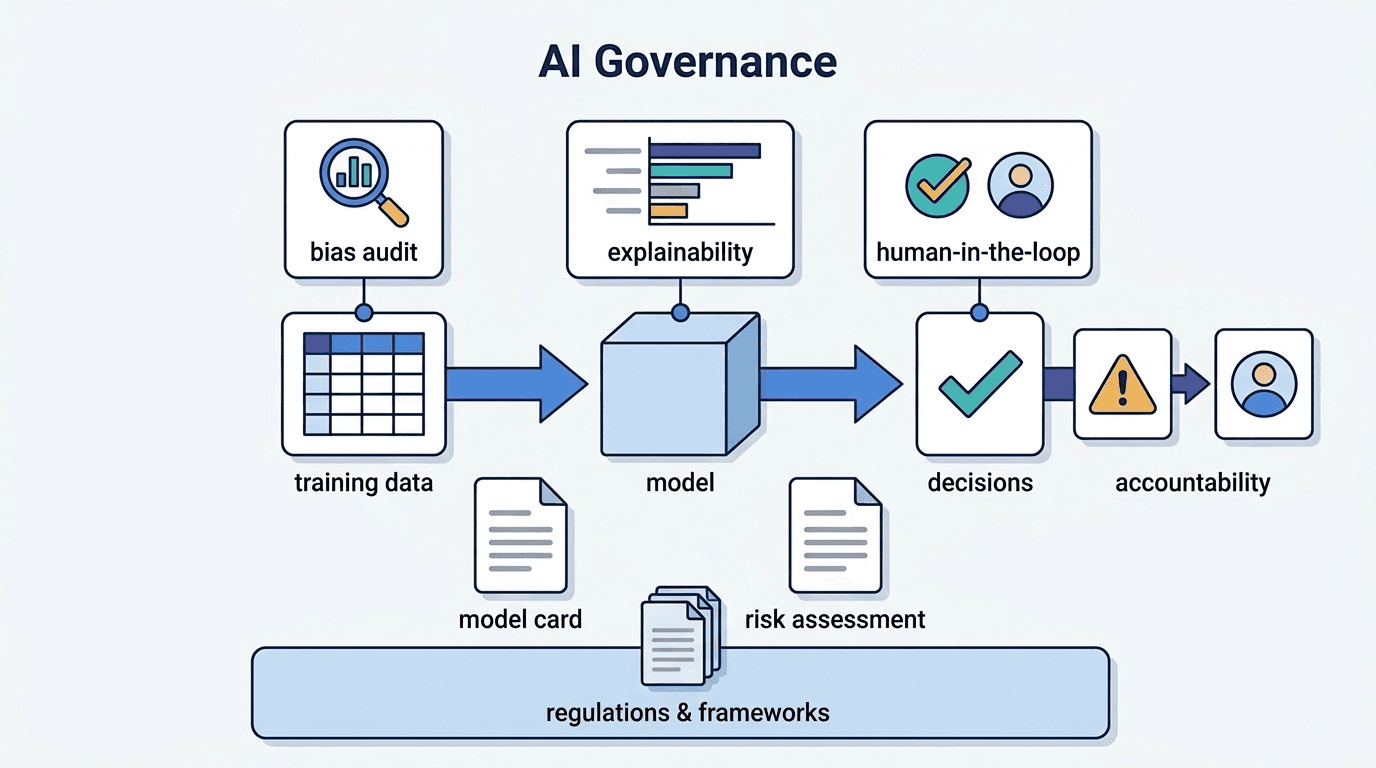
We highlight four areas within Thai customs operations where AI-driven automation and assistance can deliver significant impact. In each case, the positioning is not "AI replacing humans" but rather "accelerating human judgment." The key principles are: routing decisions to either automatic approval or HITL (Human-in-the-Loop review) based on AI confidence levels, and logging all decisions. This approach enables both operational efficiency and audit readiness.
Automated HS Code Classification Candidate Generation
Based on information such as product name, materials, intended use, and target market, the system presents the top 3–5 HS code candidates, along with the confidence level and reference cases (past in-house declaration data and WCO published rulings) for each. Since staff only need to make a final selection from the presented candidates, the time spent manually searching the tariff schedule from scratch is eliminated. Critical to this process is the design of confidence thresholds. By establishing rules that route cases above a certain confidence level to automatic approval and escalate those below it to human review, manual effort can be concentrated on high-risk classifications only. It is practical to vary confidence thresholds by industry and product characteristics — a two-tiered approach is effective: setting higher thresholds for items with significant tariff rate implications, and relaxing thresholds for low-risk items to increase the automation rate.
Automated ASEAN Certificate of Origin (Form D/E/AK) Preparation Support
In intra-ASEAN trade, utilizing Form D can achieve zero tariffs, but the determination of rules of origin (RVC/CTC) is complex, and errors in documentation frequently result in the loss of preferential tariff treatment. AI assists by reading bills of materials (BOM) and supplier information to automatically calculate the regional value content, determine compliance with the Change in Tariff Classification (CTC) criterion, and auto-generate required documents. For products with hundreds to thousands of components — such as those made by Japanese manufacturers — manually calculating origin is practically impossible, making this the area where AI assistance delivers the greatest impact. Furthermore, for products subject to frequent supplier or specification changes, the origin status changes with every BOM revision. Without AI-driven continuous recalculation, operations are structurally prone to ongoing tariff preference leakage.
Documentation Support for Thailand AEO Compliance
The Thai AEO (Authorized Economic Operator) program offers customs simplification to operators that meet certification requirements covering internal controls, logistics security, and record-keeping. Obtaining AEO certification requires the preparation of an extensive body of procedures and records, and it is common for the application process alone to take more than six months. AI reads existing internal regulations, operational manuals, and audit records, maps them against AEO requirement items, and visualizes "missing documents" and "ambiguous descriptions." In our own case, the time required to produce the initial draft of AEO application documents was reduced by approximately 60%, and the lead time from application to certification was compressed by around three months. Once AEO certification is obtained, the benefits — including reduced inspection rates, shorter customs clearance lead times, and priority review — deliver long-term value, making AI × AEO a strategically high-value investment for mid-sized and larger import/export operators.
Cross-Checking Declarations Against Invoices and Contracts
The process of verifying that quantities, unit prices, and countries of origin stated in declarations are consistent with invoices, packing lists, and sales contracts is one where errors directly translate into the risk of false declaration. AI reads across these documents, automatically detects discrepancies, and highlights them. For example, it can instantly verify whether the INCOTERMS (FOB/CIF, etc.) stated in the contract align with the dutiable value basis in the declaration, whether the country of origin matches between the invoice and the declaration, and whether quantities match the totals on the packing list. The ability to catch errors that humans tend to overlook — such as order-of-magnitude mistakes, unit discrepancies, and currency conversion errors — at an early stage carries significant value from a risk management perspective. Particularly during periods of high exchange rate volatility or in transactions involving multiple currencies, AI-driven cross-document checks substantially improve declaration quality.
Industry-Specific Use Cases — Manufacturing, E-Commerce, and Logistics

The effects of AI customs clearance vary in how they manifest depending on the industry. In this chapter, we explain how AI functions across three industries—manufacturing, cross-border e-commerce, and logistics forwarding—based on our track record of client support. Use the use case most closely matching your own business model to determine your implementation priorities.
Manufacturing: Parts Import and Tariff Optimization via FTA
For Japanese manufacturers producing automotive, electrical, and electronic components in Thailand, eligibility for FTA preferential tariffs depends on the country-of-origin composition of the parts. For products whose BOMs change frequently, manually recalculating country-of-origin determinations is practically impossible, and as a result, opportunities to claim preferential tariffs are regularly missed. AI continuously ingests BOM and supplier data, keeps the country-of-origin status of each component up to date, and automatically determines whether preferential tariff treatment applies to the finished product. In our PoC engagements, we have uncovered overlooked FTA-eligible cases, leading to tariff refunds and tax savings on the order of tens of millions of yen annually.
Cross-Border E-Commerce: Automated Classification and Duty Labels for High-Volume SKUs
E-commerce operators see their product lineups change daily, with monthly SKU additions sometimes reaching thousands of items. Now that the elimination of de minimis duty exemptions requires customs calculations for every order, operating without AI classification is no longer realistic. AI automatically assigns HS codes at the time of product master registration, calculates duty amounts at the point of shipping label generation, and presents them to the customer. AI also auto-generates refund application documents for return processing, helping to reduce reverse logistics costs. Reducing "unexpected customs charges" for Thai consumers is also significant from an NPS perspective, and for some operators, this upfront transparency enabled by AI directly drives repeat purchase rates.
Logistics and Freight Forwarders: Client-Specific Rules Engine
Customs brokers (forwarders) manage multiple clients, each with their own internal classification rules, special handling requirements, and preferential tariff utilization policies. There are limits to how much staff can rely on memory to manage client-specific rules, and handover errors occur frequently. AI learns a "classification playbook" for each client and provides staff with recommendations aligned with that client's rules. Because even new staff can maintain quality on par with veterans, forwarders can simultaneously scale their operations and uphold service quality. Since classification rationale and decision logs are retained for each client, it also becomes easier to fulfill accountability obligations in the event of SLA breaches.
5 Steps to Implementing an AI Customs System

An AI customs clearance system is not a "set it and forget it" solution—it is a project that requires continuously developing three layers: data, models, and operational processes. Below we present the 5 steps we recommend. Estimated timeframes for each step are as follows: Step 1 takes 1–2 months; Steps 2–3 run in parallel over 2–3 months; Steps 4–5 cover operational launch over 1–2 months—totaling approximately six months from PoC to go-live.
Step 1: Digitizing Historical Declaration Data
The accuracy of an AI classification model is determined by the quality and quantity of training data. Compile three to five years of past customs declaration data (product names, HS codes, tariff rates, countries of origin, and declaration outcomes) in CSV or database format. If only paper declaration copies remain, begin by digitizing them using AI-OCR. As a general guideline, aim for at least 1,000 records covering your company's primary product categories. Since the quality of training data sets the upper limit of model accuracy, it is important to include a step that distinguishes past declaration errors (misclassifications, amended declarations) through labeled annotation and evaluates whether they can be used as supervised training data.
Step 2: Training and Evaluating the HS Code Classification Model
Feed your company's past declaration data into an existing general-purpose large language model and measure its classification accuracy. Rather than seeking perfection from the outset, aim for a Top-3 accuracy rate of 80% or higher. If the correct answer is included among the top three candidates, a workflow in which a human reviewer makes the final decision will function adequately. Evaluation metrics should go beyond simple accuracy rates to also measure tariff rate impact (i.e., how much of a tariff difference a misclassification would cause), making the trade-off between business impact and accuracy visible. For model selection, a practical approach is to start with a RAG-based method that requires no fine-tuning—using your company's declaration data as a reference source—and proceed to fine-tuning only if necessary.
Step 3: Combined Use with Thailand Customs' Advance Ruling System
For items where AI classification confidence is low, or where the tariff rate impact is significant, obtain an official ruling through Thailand Customs' Advance Ruling system. While obtaining an Advance Ruling takes several weeks, the ruling received serves as a powerful basis that binds customs' judgment for identical items in the future. By incorporating past Advance Ruling cases into the AI's training data, the company can maintain alignment between internal knowledge and official Thailand Customs positions. Prioritize obtaining Advance Rulings for high-volume items that are prone to classification disputes. AI can also be effectively used to generate a list of candidate items for which an Advance Ruling should be sought.
Step 4: Designing Human-in-the-Loop (HITL) Review
Passing AI output directly through to declarations is strictly inadvisable. Design a Human-in-the-Loop (HITL) workflow that routes decisions to either automatic approval or human review based on confidence score thresholds. Specifically, divide the process into three tiers: confidence of 95% or above receives automatic approval; 85–95% undergoes a simplified checklist-based review; and below 85% requires a detailed review by an experienced customs broker. Review outcomes should be fed back into the AI model's feedback loop to continuously improve accuracy. The quality of the HITL design is the single most critical factor determining the ROI of an AI customs clearance project. Take care from the outset to thoughtfully design the review interface, escalation routes, and SLA settings.
Step 5: Ensuring Audit Logs and Explainability
For every classification decision, save structured logs containing the input information, AI model version, list of candidates, final decision-maker, and rationale for the decision. Since Thailand Customs post-audit reviews can go back five years, an infrastructure capable of storing and searching five years' worth of logs is required. A combination of cloud storage and a metadata database is the standard approach and can be operated at a cost of tens of thousands of yen per month. Incorporating tamper-prevention measures into the logs—such as WORM storage or cryptographic timestamps—further strengthens their evidentiary value during audits.
Implementation Costs and ROI Estimates

This section organizes the typical cost structure of AI customs clearance projects and a model for calculating ROI. To help decision-makers determine "when and at what cost the investment can be recovered," the framework is organized around three axes: initial investment, operational costs, and benefit estimates.
Structure of Initial Costs
Initial costs are broadly divided into four categories: (1) Data preparation (digitization and normalization of past declarations), (2) Model development (integration of proprietary data with general-purpose LLMs, RAG construction, and fine-tuning as needed), (3) Operational infrastructure (declaration system integration APIs, HITL UI, and audit log infrastructure), and (4) Business process design (HITL processes, escalation rules, and training). For a typical mid-sized business, initial investment commonly falls in the range of ¥15–40 million JPY, with the primary cause of cost overruns being underestimation of data preparation effort.
ROI Model — Break-Even Point by Number of Declarations
The key drivers of ROI are three variables: "annual number of declarations," "average tariff amount," and "current misclassification rate." For businesses processing 1,000 or more declarations per month, it is generally estimated that the combined effect of reduced pre-processing effort and improved classification accuracy allows initial investment to be recovered within 6–12 months. Even for smaller businesses handling fewer than 500 declarations per month, incorporating documentation support for AEO applications and reduction of post-audit risk brings ROI into view within approximately two years, including its value as a form of insurance. The key is to evaluate "annual throughput volume" in combination with "product diversity" — the greater the number of product categories, the higher the relative value of AI.
5 Failure Patterns in Thai Customs AI and How to Avoid Them

Here are five typical patterns in which AI customs clearance implementations fail, along with strategies to avoid them.
1. Entering PoC without sufficient training data: Attempting to measure accuracy with fewer than 100 past declaration records results in evaluation outcomes buried in noise, making informed decision-making impossible. Prepare a minimum of 1,000 records, and ideally 3,000 or more.
2. Setting full automation as the goal: HS code classification inherently involves gray areas on the customs authority's side, making 100% automation unrealistic. By setting the goal as "improving the efficiency of human judgment" with HITL as a prerequisite, a realistic ROI becomes achievable.
3. Insufficient involvement of experienced customs brokers: The training data for AI models consists of past declarations, and the quality of that data depends on the judgment of experienced customs brokers. Involve senior brokers from the start of the project, including reviews of training data validity.
4. Adding audit logs as an afterthought: Deferring log design leads to situations after launch where post-audit requirements cannot be met. Design from the outset to satisfy three requirements: 5-year retention, searchability, and tamper-proofing.
5. Failing to keep pace with operational changes on the Thai Customs side: The tariff schedule is revised annually, and operational circulars are issued frequently. Incorporate the AI model retraining cycle (quarterly recommended) and the process for integrating operational circulars as standard ongoing operations. Our company provides operational templates that automate detection of tariff schedule revisions and generate monthly lists of affected product categories.
Frequently Asked Questions (FAQ)

Q1. Is AI-based classification accepted by customs authorities? A. Thai Customs accepts declarations classified using AI, but final responsibility lies with the declarant. Be sure to clearly document that AI is used as a decision-support tool and that final judgment is made by a human. Relying solely on AI for declarations is also not recommended from a professional ethics standpoint.
Q2. Can the system handle multilingual invoices (Thai/English/Japanese)? A. Large language models support major languages, and item extraction from Thai-language invoices is sufficiently practical. However, registering proper nouns (local supplier names, place names) in a dictionary in advance helps stabilize accuracy. Building an internal terminology dictionary is an important part of the initial process.
Q3. Can it integrate with existing customs systems (such as SAP GTS)? A. AI classification results can be passed to existing systems via API. Integration with SAP GTS, Oracle GTM, and various customs broker-specific systems has been implemented. It is advisable to insert an ETL layer for integration, and a design that clearly separates the responsibilities of AI input/output from those of the declaration system is recommended.
Q4. What are the estimated implementation costs and ROI? A. While this depends on the number of product categories and declaration volume, for companies handling 1,000 or more import/export declarations per month, it is generally possible to see ROI within 6–12 months when combining annual tariff differentials, overtime reduction, and avoidance of customs clearance delays.
Q5. Is AI accepted in Thai AEO applications? A. The internal control requirements for AEO include "risk management processes." The combination of AI classification and HITL tends to be evaluated positively as a basis for reducing the risk of over-reliance on individual personnel. For companies pursuing AEO certification, proceeding with AI implementation and AEO application preparation in parallel can generate synergistic benefits.
Q6. Are there any issues with cross-border data transfers (from Thailand to Japan or overseas)? A. When handling documents that contain personal data subject to the PDPA (Thailand's Personal Data Protection Act), it is necessary to establish a legal basis for cross-border data transfers. Many AI customs clearance vendors offer the option of storing data in the AP region, and PDPA compliance can be achieved through region selection and vendor contracts.
Conclusion — Turning Thailand's 2026 Customs Reform into an Opportunity with AI

The 2026 Thai customs reform carries both a negative dimension—a sharp increase in compliance burden—and a positive one—an opportunity to drive operational transformation—for Japanese companies operating in Thailand. The conditions have finally been put in place to systematically address long-standing challenges such as the personalization of HS code classification, the complexity of certificates of origin, and the documentation burden associated with AEO, through a combination of AI and HITL (Human-in-the-Loop). What matters most is rigorously applying, from day one, three core design principles: "do not let AI handle everything end-to-end," "accelerate human decision-making," and "log every judgment made." The return on investment becomes clear once monthly declaration volumes exceed 1,000 filings, and when long-term value—such as AEO certification and preparedness against post-audit risk—is factored in, AI-powered customs processing is becoming a de facto essential investment for mid-sized and larger import/export operators. Our company provides end-to-end support for Japanese businesses conducting import/export operations in Thailand, covering everything from data preparation and HITL operational design to the construction of audit log infrastructure. If you are facing challenges in adapting to the 2026 reforms, please do not hesitate to contact us.
Author & Supervisor

Yusuke Ishihara
Started programming at age 13 with MSX. After graduating from Musashi University, worked on large-scale system development including airline core systems and Japan's first Windows server hosting/VPS infrastructure. Co-founded Site Engine Inc. in 2008. Founded Unimon Inc. in 2010 and Enison Inc. in 2025, leading development of business systems, NLP, and platform solutions. Currently focuses on product development and AI/DX initiatives leveraging generative AI and large language models (LLMs).
Recommended Articles