What is LLM-as-a-Judge? A Method for Evaluating AI Output with AI and Implementing Hallucination Detection

Lead
LLM-as-a-Judge is a technique in which the output of a large language model (LLM) is evaluated by another LLM. Because it enables quality scoring, hallucination detection, and tone and consistency assessment faster and with greater reproducibility than manual review, it is becoming an indispensable quality assurance pattern during the transition from PoC to production deployment.
In production environments, it is necessary to continuously inspect the large volume of responses generated daily to determine whether accuracy has fallen below acceptable thresholds and whether misinformation or harmful content has crept in. Manual evaluation cannot keep pace in terms of both cost and scalability, and we have entered an era where the ability to design Judge pipelines—replacing human evaluators with LLMs—directly determines operational quality.
This article is intended for engineers operating LLMs in production, LLMOps practitioners, and quality assurance managers. It systematically covers the full picture of LLM-as-a-Judge (also written as LLM as a Judge), representative evaluation protocols (Pointwise / Pairwise / Reference-based), major biases and countermeasures, a four-step implementation guide, and operational patterns. It also addresses how LLM-as-a-Judge coexists with AI Observability and Guardrails, as well as the design of regression evaluation integrated into CI/CD pipelines.
LLM-as-a-Judge refers to an evaluation pattern in which a separate LLM is assigned the role of "evaluator (Judge)" for a given output, and performs judgments and scoring according to a pre-defined rubric. Its greatest feature is the ability to quantify qualitative indicators—such as contextual relevance, logical consistency, and harmfulness—that surface-level metrics like BLEU or ROUGE cannot measure, simply by adjusting the prompt.
It is orders of magnitude cheaper and faster than manual evaluation, while offering more flexible and meaningful metrics than automated metrics alone. This intermediate nature is the background behind its rapid adoption as a practical quality assurance solution for LLMs in production.
Definition and Concepts
The basic structure of LLM-as-a-Judge is simple, consisting of the following three elements:
- Evaluation target: The output of a user-facing LLM (Production LLM), or responses generated by multiple models
- Judge LLM: A separate LLM given a prompt specialized for the evaluation task
- Rubric (evaluation criteria): Instructions that explicitly define the axes of scoring, such as accuracy, relevance, safety, and conciseness
The Judge reads the rubric and then scores the output (Pointwise), selects the better of two responses (Pairwise), or assesses the degree of alignment with a reference answer (Reference-based). Scoring results are accumulated in a logging infrastructure and connected to observability dashboards, regression detection in CI/CD, A/B test decisions, and more.
A key point is that "the Judge is not a replacement for manual evaluation, but an amplifier for scaling manual evaluation." Because a poorly designed system risks mass-producing automated misevaluations, investing in rubric design and validation processes is the key to success.
Differences from Human Evaluation and Automated Metrics
LLM-as-a-Judge coexists with conventional evaluation methods through a division of roles. The practical approach is to understand the characteristics of each method and use them accordingly.
- Manual evaluation (human review): The most reliable, but limited in terms of cost, speed, and scalability. Serves as the reference point for edge cases and final judgments.
- Automated metrics (BLEU / ROUGE / embedding similarity): Fast, low-cost, and highly reproducible, but unable to measure contextual relevance or reasoning correctness. Functions as a baseline for regression detection.
- LLM-as-a-Judge: Allows flexible definition of evaluation axes using natural-language rubrics and can process large volumes of responses at high speed. On the other hand, it is subject to bias and non-determinism issues.
In practice, a two-tier structure is common: "the Judge handles initial screening, while humans review edge cases and perform final checks just before release." Automated metrics are retained as a quantitative baseline and monitored for correlation against Judge scores. The skill of a quality assurance team lies in using all three methods as complements rather than treating them as competing alternatives.
Why LLM-as-a-Judge is Needed Now

As generative AI is increasingly deployed in production, it is no longer realistic to manage quality assurance through manual evaluation alone. In environments where hundreds to thousands of interactions occur per service every day, quality degradation will go undetected unless the evaluation sampling rate is raised. At the same time, the unit cost and turnaround time of manual review do not decrease. LLM-as-a-Judge is rapidly becoming established as the first-choice solution for bridging this gap.
Quality Assurance Challenges at Operational Scale
Once you begin operating a production LLM, quality-related issues tend to surface in the following ways:
- Unmeasured hallucination rates: Factual errors are only discovered after user complaints come in
- Regression from prompt or model updates: A single-line change to a prompt degrades accuracy on another task, but goes unnoticed
- Inability to compare A/B test results: There is no quantitative basis for judging whether a new version is better beyond a vague sense that it "seems improved"
- Missing rare edge cases: 99% of responses are fine, but the remaining 1% produce serious errors
- Drift from external factors: Behavioral changes caused by vendor-side model updates go undetected
LLM-as-a-Judge addresses these issues by offering a solution of "quantitative scores × large sample sizes × continuous monitoring." By integrating a Judge into CI/CD, regression tests run automatically with every prompt change, allowing problems to be detected before deployment to production. Adding sampled evaluation of operational logs enables early detection of drift after the system goes live.
Positioning Relative to Observability and Guardrails
Evaluation tools often serve overlapping roles, and without a deliberate design for how they divide responsibilities, you risk redundant investment. The roles of the three can be distinguished as follows:
- AI Observability: Collects LLM inputs/outputs, latency, costs, and error rates to ensure observability (covered in detail in What is AI Observability?)
- AI Guardrails: Inspects inputs and outputs at runtime (during request processing) and blocks or rewrites unsafe responses — a safety barrier (see AI Guardrails Implementation Guide for details)
- LLM-as-a-Judge: Scores response "quality" retroactively or in near-real-time, and is used for trend analysis and regression detection
Observability measures, Guardrails block, and Judge scores. The three are not in competition — the ideal stack is to log with Observability, stop risks with Guardrails, and continuously evaluate with Judge. AI Red Teaming serves as a complementary layer for adversarial robustness testing. With all four layers in place, you have a configuration that satisfies the fundamental requirements for quality, safety, and observability demanded by production operations.
LLM-as-a-Judge Overview

When designing a Judge, the two core decisions in the initial design are: "which evaluation protocol to choose" and "what rubric to use for scoring." Protocol selection determines stability and cost, while rubric design determines the meaning and consistency of scores. This section organizes the available options and key design considerations for each.
Comparison of Pointwise / Pairwise / Reference-based Approaches
The three representative protocols differ in their characteristics as follows:
| Protocol | Input | Output | Strengths | Weaknesses | Suitable Tasks |
|---|---|---|---|---|---|
| Pointwise (direct scoring) | Single response | Numeric score (e.g., 1–10) | Simple to implement, suited for high-volume processing | Score distribution is unstable and can vary even for identical inputs | Factuality, toxicity, policy violation detection |
| Pairwise (comparative) | Response A and Response B | A wins / B wins / Tie | Strong for subjective evaluation, high correlation with human judgment | Combinations grow at O(n²), making it costly | Comparison of tone, persuasiveness, and consistency |
| Reference-based | Response + gold reference | Score or degree of match | Objective, well-suited for fact-based verification | High cost of building a reference dataset | FAQ, templated responses, RAG factual verification |
Recent research reports that pairwise evaluations reverse their judgments approximately 35% of the time, while pointwise absolute scores fluctuate approximately 9% of the time — quantifying the tradeoff that "pairwise picks up subtle differences but is unstable, while pointwise is stable but has lower resolution."
In practice, the standard approach is to select protocols based on the nature of the task and to use multiple protocols in combination for release decisions and high-stakes tasks. A phased rollout — starting with Pointwise and progressively adding Pairwise for tasks with a higher proportion of subjective evaluation — is the approach least likely to fail.
Designing Judge Prompts and Rubrics
Judge performance is largely determined by the prompt and rubric. The minimum elements to include are as follows:
- Definition of evaluation dimensions: For example, four axes — accuracy, relevance, conciseness, and harmfulness. Having too many dimensions dulls the Judge's judgment, so 3–5 axes is practical
- Score scale and criteria: Describe what each score means with concrete examples (e.g., 5 = perfect, 3 = partially correct, 1 = incorrect answer)
- Few-shot examples: Provide 2–3 representative examples for each score level to prevent skewed score distributions
- Explicit conciseness requirement: Without explicitly stating "unnecessarily long responses should be penalized," the Judge will tend to favor verbose responses
- Output format: Have the Judge return JSON in the form
{score, reasoning, evidence}to ensure parseability
The rubric is a "natural-language specification" and should be version-controlled with a change history. Since changing the prompt changes the Judge's behavior, whenever the rubric is updated, a re-measurement of correlation with human evaluation must always be run. Skipping this step leaves the Judge producing scores that are numerically present but meaningless.
Common Pitfalls (Bias and Reliability)

Judge is powerful, but stepping into the following pitfalls during implementation can significantly undermine score reliability. This section organizes four representative bias and reliability issues, along with their mechanisms and countermeasures.
Position Bias and Verbosity Bias
In pairwise evaluation, a "position bias" is widely observed, where judgments change depending on the order of presentation. There is a tendency to rate the first response presented more highly, and this becomes more pronounced as the number of candidates increases to three or four. Countermeasures are as follows.
- Order randomization: Evaluate the same pair in both A-B and B-A order, then average the results
- Consistency check: Only accept a score as official when judgments match across both orders; send discrepancies to human review
Verbosity Bias is the phenomenon where the Judge mistakenly perceives longer responses as "more helpful" and rates them higher. Even in cases where a concise answer would be preferable from a user experience standpoint, the Judge ends up evaluating in the opposite direction. The countermeasure is explicit specification in the rubric: write "excessive verbosity results in a deduction" and concretize this as "evaluate the balance of conciseness and accuracy." Presenting a short, high-quality response alongside a long, mediocre response in few-shot examples makes it easier to align the Judge's behavior with the intended direction.
Self-Preference Bias and Cross-Model Evaluation
When responses are generated by the same model that performs the scoring, a Self-Preference Bias arises in which the model rates its own writing style more highly. This is further compounded by Self-Enhancement—the tendency that "facts the model doesn't know, the Judge also cannot detect"—causing the evaluation to lose its independence.
The countermeasure is cross-model evaluation, which uses different model families for generation and judging.
- Generation model: Claude family
- Judge model: GPT family or Gemini family
- Critical tasks: Adopt majority vote or ensemble scores from multiple Judges
A cross-vendor configuration adds overhead in terms of operations, billing, and latency, but it is a worthwhile investment to ensure evaluation independence. When internal policy restricts use to a single vendor, at minimum combine models of different generations and sizes within the same vendor and monitor their correlation.
Score Distribution Skew and Lack of Determinism
It is widely observed that scores fluctuate when the same input is submitted to the Judge multiple times. Since complete reproducibility cannot be achieved even with temperature=0, design with the following assumptions in mind.
- Averaging multiple samples: For critical tasks, average 3–5 evaluations to produce a score
- Score distribution monitoring: Detect widening variance as an alert
- Version pinning: Explicitly specify the model identifier used for the Judge, and re-verify correlation with past data upon updates
- Scale design: A 1–10 scale offers higher resolution than a 1–5 scale, but also increases the tendency for the Judge to cluster around the median. Use binary (pass/fail) and finer scales appropriately depending on the task
Judge scores carry more meaning in terms of "change over time" than in absolute values. The key to operation is fixing a baseline and tracking relative changes. Design a dashboard that monitors both variance and drift from the outset.
Hallucination in the Judge Model Itself
The Judge LLM itself can hallucinate, deducting points based on non-existent reasoning or awarding high scores based on information not found in the reference. Having the Judge output reasoning (rationale for the judgment) and evidence (cited passages) in JSON simultaneously with the scoring, and then running the following post-checks, improves detection accuracy.
- Whether the reasoning contains specific citations
- Consistency between reasoning and score (e.g., no negative rationale accompanying a high score)
- Whether any claims contradict the reference answer
- Whether the rationale is based on elements not present in the evaluated content
Since the Judge is itself an LLM, it cannot be trusted completely. Operating a mechanism that periodically samples and manually audits the reasoning alongside the Judge enables early detection of drift or malfunctions in the Judge itself.
Implementation Steps (4 Stages)

To deploy a Judge in production, following the correct order — from evaluation dataset construction to pipeline integration — is what determines the likelihood of success. The introduction proceeds in 4 steps, implemented incrementally. Skipping any step tends to cause rework in later stages.
Step 1: Building an Evaluation Dataset
The first thing to prepare is a dataset of representative input/output pairs collected from the actual service. Quality over quantity — starting with around 50–200 examples is sufficient.
- Layered sampling: Sample across 3 tiers: "typical cases," "edge cases," and "known failure cases"
- Gold label assignment: Manually label at least 20–30 examples with correct answers or ideal responses
- Version control: Manage the dataset with version control such as Git to enable diff reviews
- Anonymization: If personal information is included, always anonymize it before feeding it into the evaluation infrastructure
The evaluation dataset functions as a "benchmark to be re-measured every time a prompt is updated or a model is changed." Even if small in scale, what matters more is quality that is continuously maintained. By adding new failure cases as they are discovered, it grows into a defensive benchmark.
Step 2: Rubric Design and Human Evaluation Validation
Once a rubric is written, always verify whether "the Judge's scores align with human scores." Low correlation is evidence that the rubric's descriptions are ambiguous.
- Score 30–50 samples using both the Judge and human evaluators
- Measure agreement using Pearson correlation coefficient or Cohen's κ, with 0.6 as a rough target
- Identify specific cases of disagreement and add few-shot examples to the rubric
- If necessary, break down evaluation criteria further (e.g., splitting "accuracy" into "factuality" and "logical consistency")
Skipping this step results in a Judge whose scores are "numbers that exist but carry no meaning." Human correlation verification is indispensable for ensuring the quality of the Judge pipeline, and should be performed with particular care for high-stakes tasks used in release decisions. Make it standard practice to repeat this verification every time the rubric is revised.
Step 3: Pipeline Integration and CI/CD Alignment
A validated Judge is connected to both development and production pipelines.
- Regression evaluation in CI/CD: When prompts or models are updated, run the Judge across the entire evaluation dataset to detect score drops. The Harness Engineering article is a useful reference for evaluation harness design philosophy
- Sequential evaluation via batch inference: Sample responses from production logs and have the Judge evaluate them in a nightly batch
- Alert thresholds: Send a notification to Slack or similar when the average score drops X% below the baseline
- Release gate: Changes where scores on key metrics fall below the baseline are automatically blocked from merging
Since Judge evaluation is computationally expensive, a cost-effective approach is to run it on a sample rather than the full volume, with higher evaluation rates reserved for critical endpoints. Keep the costs of the evaluation targets and the main LLM separate, with clearly defined budget allocations for each.
Step 4: Continuous Judge Quality Monitoring
Deploying a Judge is not a one-time effort — the following ongoing operations are required.
- Re-validation upon Judge model updates: When a vendor updates a model, verify that correlation with past scores is maintained
- Change history for rubric revisions: Record the reasons for changes and the results of effectiveness verification
- Manual sampling audits: Re-evaluate a fixed number of cases manually each month to monitor Judge drift
- Evaluation dataset expansion: Add new failure cases to the dataset as they are discovered
- Metrics dashboard: Visualize score distribution, variance, human agreement rate, and reversal rate in a single view
The Judge pipeline can also be used for post-fine-tuning re-evaluation. For details on the methodology, combining this with Introduction to Fine-Tuning with PEFT connects the full flow — from fine-tuning to regression detection via Judge — into a coherent quality assurance loop.
Operational Implementation Patterns

When implementing a Judge, operational overhead and costs vary significantly depending on "when" and "where" evaluations are run. This section organizes the two primary patterns and how to combine them in practice.
Offline Evaluation vs. Online Evaluation
Offline refers to evaluating against a dataset in advance; online refers to evaluating production user responses in near real-time.
- Offline Evaluation
- Execution timing: CI/CD, pre-release validation, weekly regression
- Characteristics: Reproducible with a fixed dataset, predictable costs, human correlation validation is also performed here
- Suitable tasks: Prompt optimization, model replacement decisions, version-to-version comparison
- Online Evaluation
- Execution timing: Near real-time evaluation of sampled production logs (1–5%)
- Characteristics: Can detect unknown distributions dependent on real traffic, though cost management is critical
- Suitable tasks: Quality degradation alerts, drift detection, identifying issues before user reports
A typical setup is a two-layer architecture: "offline for regression prevention, online for drift detection." Since Judge-side costs are non-negligible, apply the principles from the LLM Cost Optimization Guide — sampling rates, model selection, and prompt caching — to the evaluation side as well.
Data handled by evaluation pipelines often contains personal information, so anonymization and access control must not be overlooked. Considerations for operating in Thailand are summarized in the Thailand PDPA Compliance Checklist. For prompt input/output inspection from a security perspective, please read this alongside the LLM Security Implementation Guide (OWASP × TypeScript).
FAQ

Below is a summary of questions frequently raised by readers, along with answers based on our project experience.
Can LLM-as-a-Judge Fully Replace Human Evaluation?
It cannot replace human evaluation. A Judge is effective for initial screening and continuous monitoring of large volumes of responses, but human evaluation remains necessary for the reliability of judgment rationale and handling edge cases. In practice, a two-layer structure — where "the Judge covers 80–90% of day-to-day operations, while humans review pre-release and boundary cases" — is the realistic solution. It is advisable to design the Judge as a lever that augments human evaluation, not as a replacement for it.
Should the Judge Model and Generation Model Be the Same?
This is not recommended. The same model carries a self-preference bias that causes it to rate its own outputs highly, compromising the independence of evaluation. It is preferable to use different model families for generation and the Judge, and to consider an ensemble of multiple Judges for critical tasks. Using a cross-model configuration also offers the benefit of making the evaluation side less susceptible to the impact of a single vendor's specification changes or quality degradation.
Which Should You Choose: Pointwise or Pairwise?
The choice depends on the nature of the task. Tasks that allow objective evaluation—such as factuality checks and policy violation detection—are well suited to Pointwise, while tasks centered on subjective evaluation—such as tone, persuasiveness, and logical consistency—are better served by Pairwise. For high-stakes decisions like release gates, it is safer to run both and verify their consistency. Starting with Pointwise during initial rollout, then gradually migrating tasks with a higher proportion of subjective evaluation to Pairwise, helps keep operational overhead manageable.
What Are the Operational Costs of a Judge?
Costs vary significantly with evaluation frequency and volume, but configurations that sample 1–5% of production traffic typically fall within roughly 5–15% of the main application's LLM costs. Further reductions are possible through measures such as using a lightweight model as the Judge, enabling prompt caching, prioritizing Pointwise over Pairwise, and raising the evaluation rate only for critical endpoints. For details on budget management, refer to the LLM Cost Optimization Guide.
How to Use Guardrails and Observability Together?
Keeping roles clearly separated avoids redundant investment. Observability handles "log collection and visualization," Guardrails handles "real-time blocking," and LLM-as-a-Judge handles "continuous quality scoring." The ideal operational setup connects all three to the same monitoring infrastructure so that Guardrails block counts, Judge score trends, and Observability latency can all be viewed on a single screen. Because anomalies across each layer often appear in correlation, consolidating them into a cross-cutting dashboard accelerates the initial response to incidents.
Summary and Further Reading

LLM-as-a-Judge is a standard pattern that fills the missing piece in production quality assurance. By mastering appropriate protocol selection, bias mitigation, and correlation validation with human evaluation, you can continuously monitor response quality at a scale that human review alone cannot keep pace with. Roll out the system incrementally, and be sure to design in monitoring of the Judge's own quality as well as management of operational costs.
The Judge does not stand alone. Combining it with the related articles below strengthens the entire AI operations stack.
- What Is AI Observability? A Guide to Monitoring LLMs in Production — Designing log infrastructure and observability
- AI Guardrails Implementation Guide — Designing runtime safety guardrails (publication pending)
- What Is AI Red Teaming? — Validating adversarial robustness
- LLM Cost Optimization Guide — Also applicable to reducing Judge-side costs
- Harness Engineering — Approaches to embedding evaluation in CI/CD
- Introduction to Fine-Tuning with PEFT — Judge loop after fine-tuning
- LLM Security Implementation Guide (OWASP × TypeScript) — Combined use with input/output inspection
- Thailand PDPA Compliance Checklist — Anonymization requirements for evaluation data
We have built LLM-as-a-Judge pipelines across multiple client engagements and have accumulated expertise in evaluation dataset design, rubric development, and human correlation validation. Teams looking to advance their quality assurance practices to the next level are encouraged to refer to the related articles above alongside this guide.
Author & Supervisor

Yusuke Ishihara
Started programming at age 13 with MSX. After graduating from Musashi University, worked on large-scale system development including airline core systems and Japan's first Windows server hosting/VPS infrastructure. Co-founded Site Engine Inc. in 2008. Founded Unimon Inc. in 2010 and Enison Inc. in 2025, leading development of business systems, NLP, and platform solutions. Currently focuses on product development and AI/DX initiatives leveraging generative AI and large language models (LLMs).
Recommended Articles


Terms related to this article
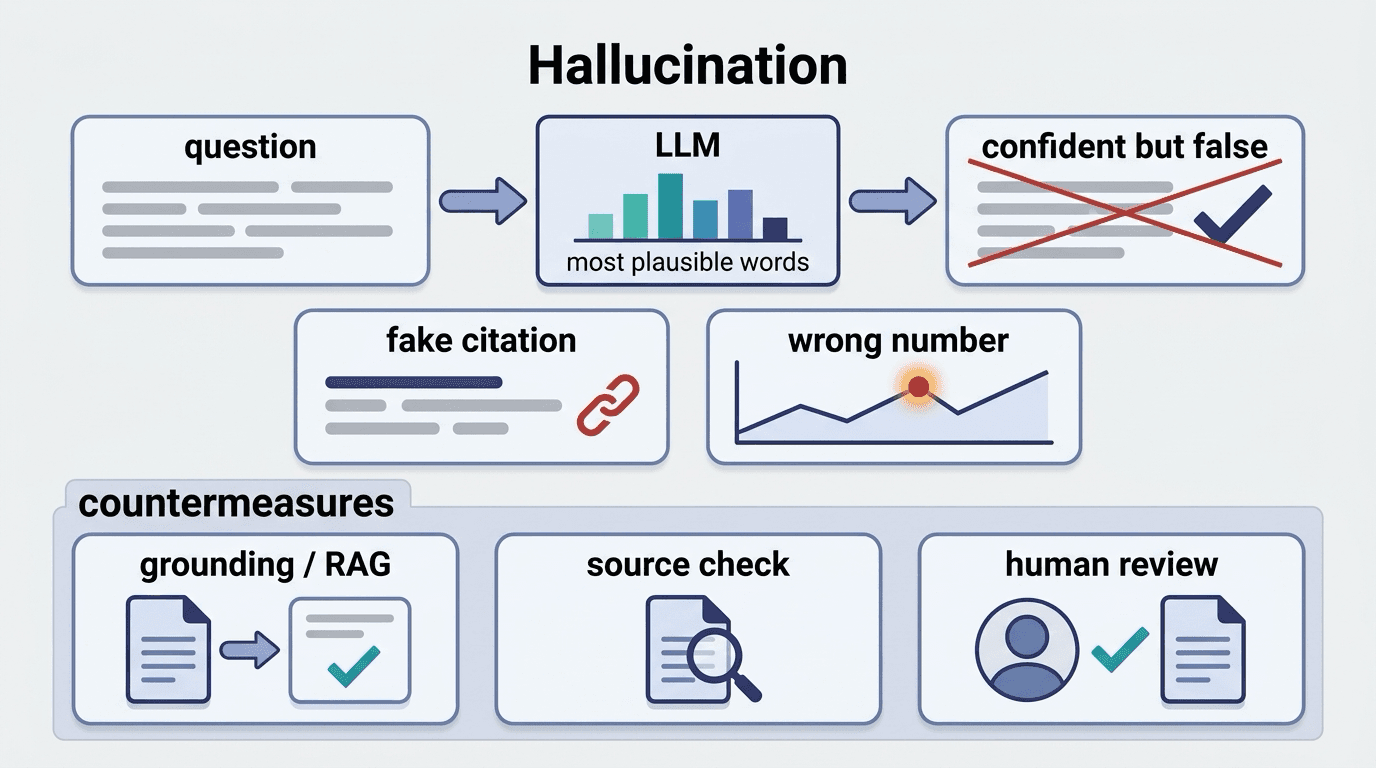
Hallucination (Hallucination)
Hallucination refers to the phenomenon in which an AI model generates information that is not based
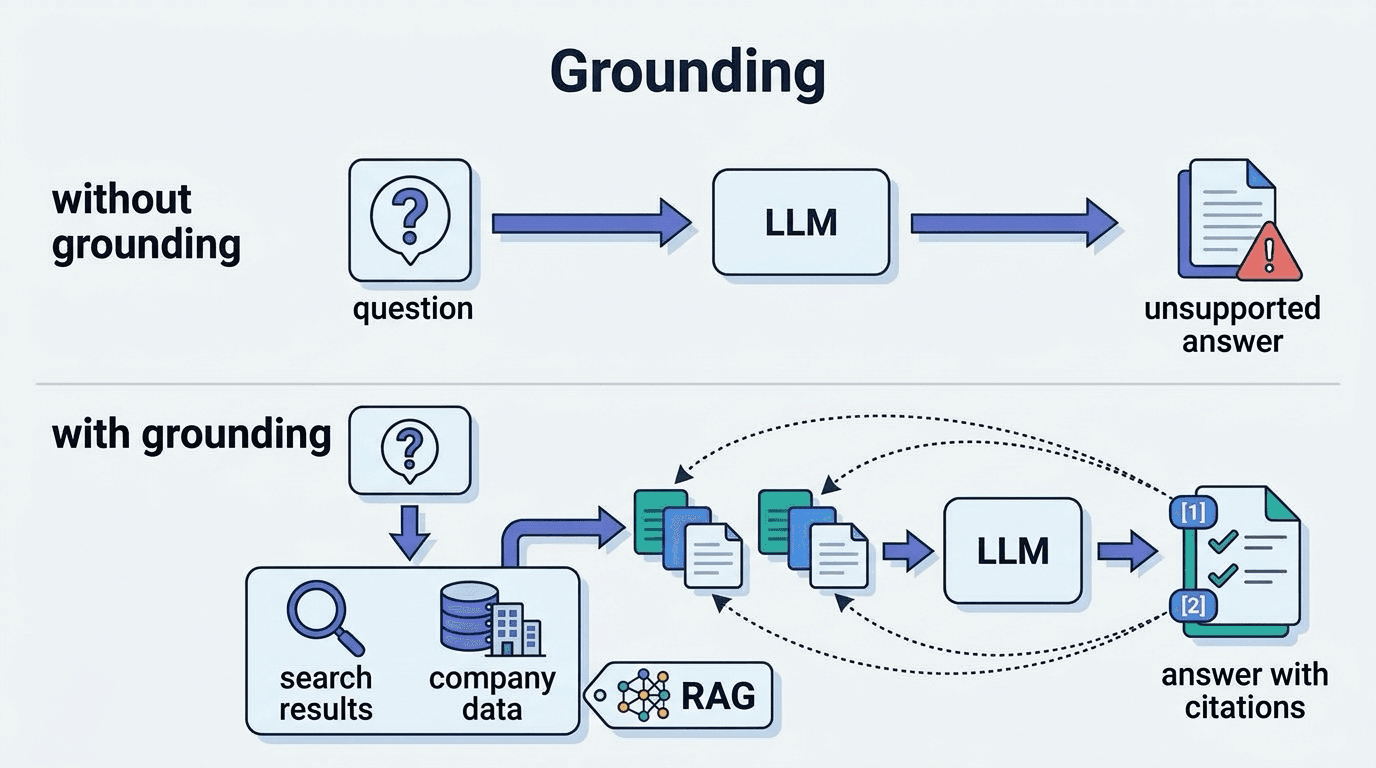
Grounding
A technique that cross-references LLM outputs with external data sources and search results to gener
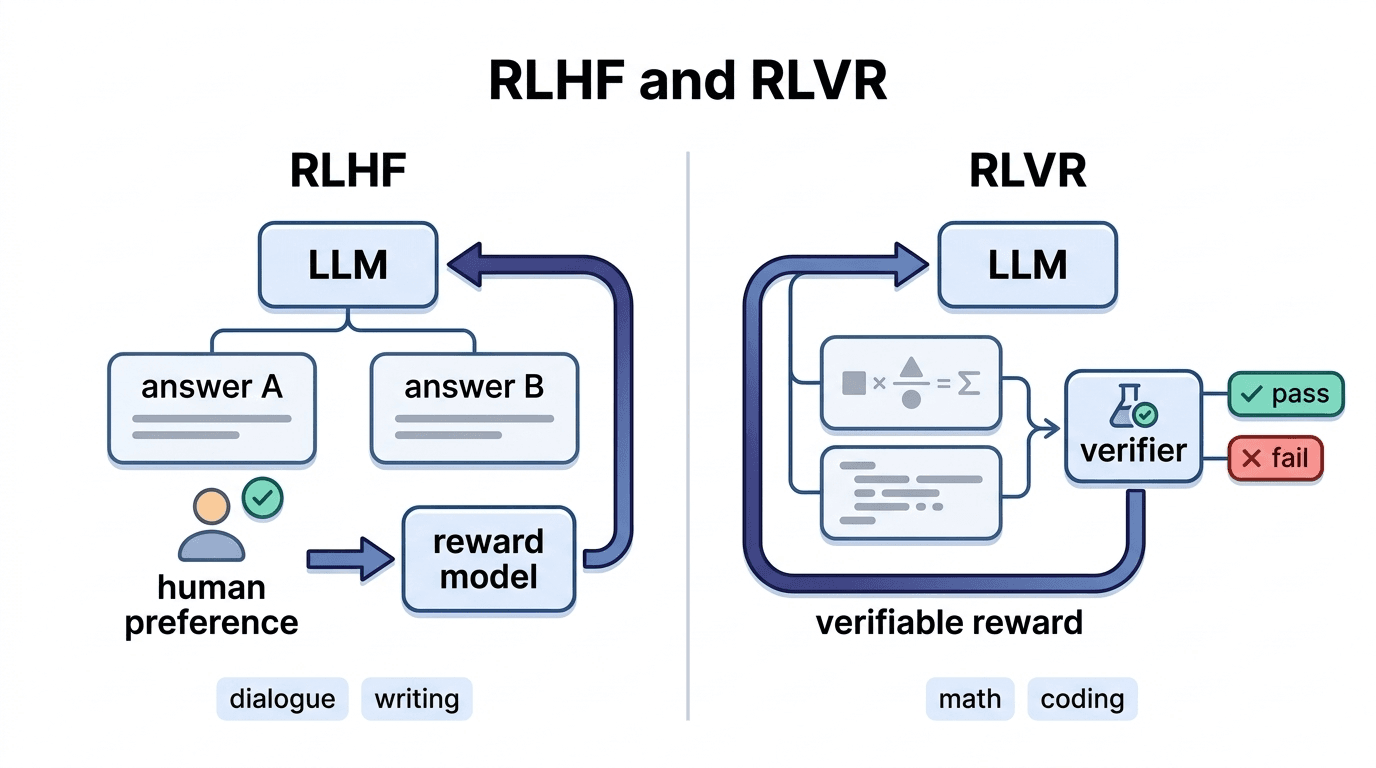
RLHF
RLHF is a reinforcement learning method that uses human feedback as a reward, while RLVR is a reinfo