AI Guardrails Implementation Guide — How to Design Safety Barriers for LLM Applications

Lead
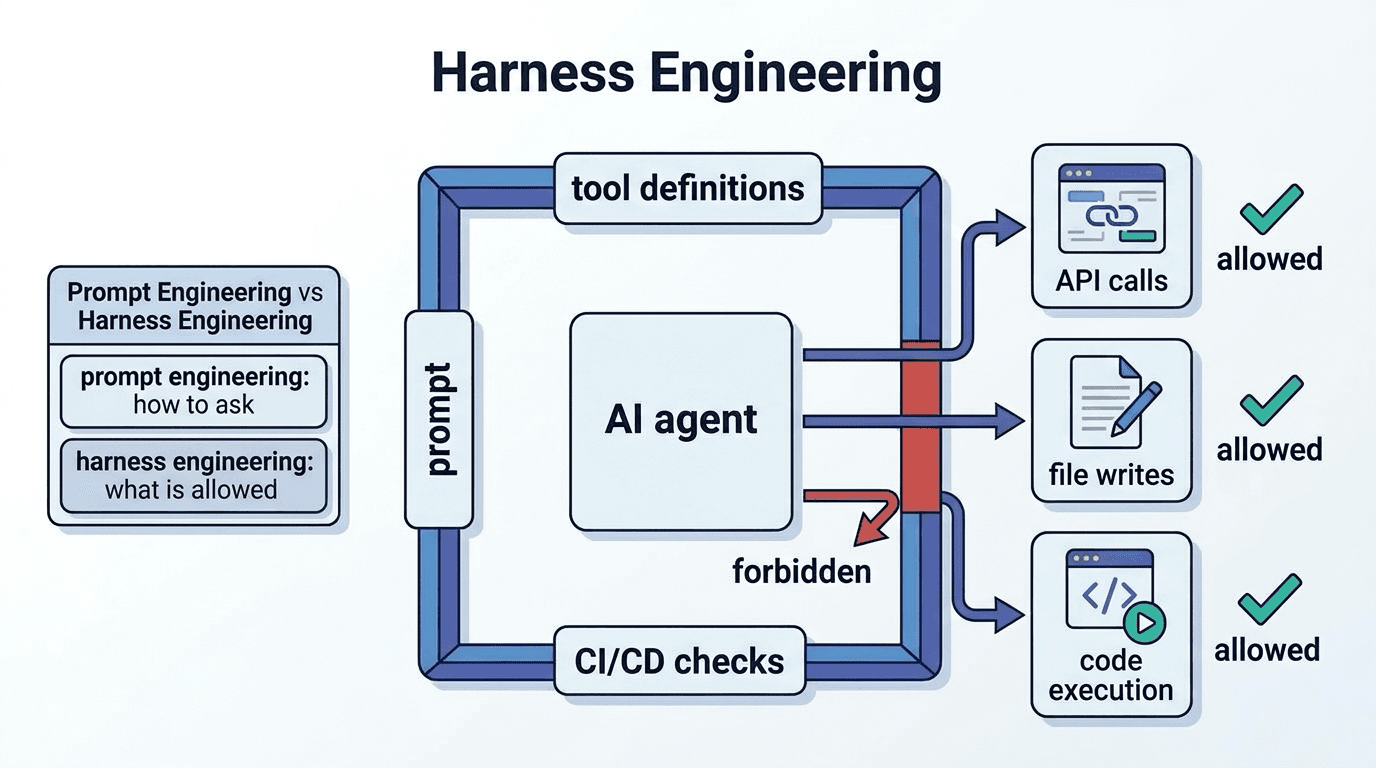
AI guardrails are a collective term for safety mechanisms that inspect and control the inputs and outputs of LLM applications, reducing risks such as prompt injection and hallucination.
While the deployment of generative AI into production is accelerating, there have been reports of applications released without adequate safeguards leading to unauthorized manipulation and the spread of misinformation. This article is aimed at engineers and product managers involved in the design, development, and operation of LLM applications, and explains—from an implementation perspective—everything from defining threat models to input/output guards, evaluation set construction, and multi-tenant support. By the end, you will have a design framework that can be immediately applied to your own services.
To design guardrails correctly, you must first clarify "what you are protecting." Starting implementation without taking stock of the risks on both the input and output sides tends to result in excessive blocking or overlooked threats.
The first thing to tackle is organizing the data your LLM application handles and identifying your expected users. Next, map out the pathways through which threats such as prompt injection and hallucination can occur. Skipping this prerequisite work tends to significantly increase implementation costs in later stages.
Organizing Inputs and Outputs to Protect
Before designing guardrails, you must first clarify "what you are protecting." There are assets to protect on both the input and output sides, and each has a different nature.
Assets to protect on the input side
- Prompt Injection: An attack in which a user embeds malicious text to overwrite the System Prompt. Both Direct Injection and Indirect Injection via external data should be anticipated.
- Sensitive Information Disclosure: Cases in which users inadvertently or intentionally enter personal information or credentials.
- Unbounded Consumption: Overload caused by extremely long prompts or a large volume of requests.
Assets to protect on the output side
- Hallucination: The risk that an LLM (Large Language Model) generates information that differs from the facts with apparent confidence.
- Improper Output Handling: Cases in which generated text is passed directly to code or SQL, triggering injection attacks.
- System Prompt Leakage: The problem of system prompt content being included in responses.
As a practical approach to this inventory, start by drawing a data flow diagram of your application and identifying every touchpoint in the "user input → LLM → external system" chain. Mapping the threats listed above to each touchpoint will naturally reveal priorities. The OWASP LLM Top 10 is a valuable reference as a starting point for this exercise.
The next section moves on to the procedure for assessing the current state of an existing application.
Assessing the Current State of Existing LLM Applications
Before beginning guardrail design, it is essential to accurately understand the "current state" of your existing application. Proceeding with implementation while leaving design blind spots unaddressed tends to cause large-scale rework in later stages. Start by taking stock of the current situation and narrowing down your priority issues.
Key points to verify
- Input/output pathways: Diagram how user input merges into the system prompt and where RAG retrieval results are incorporated into the prompt.
- Context window usage: When conversation history, tool results, and external documents are mixed together, they can easily become pathways for indirect injection.
- Presence of logs: If inputs, outputs, and model responses are not being recorded, it will be impossible to verify after the fact whether hallucinations or improper output handling have occurred.
- Permission scope: Verify whether the permissions that agentic AI holds over APIs and databases are limited to the minimum necessary. Excessive agent permissions significantly increase risk.
How to conduct the inventory
Review the existing codebase and identify the content, update frequency, and owner of the system prompt. Also check whether user input is being concatenated into the prompt without validation. It is not uncommon to find multiple prompt injection entry points at this stage.
If logs exist, sample past interactions to extract problematic output patterns. If logs do not exist, prioritize implementing minimal input/output logging first. Designing guardrails without understanding the current state carries a high risk of overlooking the areas that need protection.
Implementation Steps for AI Guardrails

Guardrail design can only be translated into code once "what to protect" has been determined. This section walks through three steps in sequence, from defining the threat model to implementing guards for both inputs and outputs. While each step may appear independent, keep in mind that this is an iterative process in which the design of later steps prompts a revisiting of earlier ones.
Step 1: Defining the Threat Model
The first step in implementing guardrails is creating a threat model that organizes what needs to be protected and the potential attack vectors. Stacking filters without a design plan carries a high risk of overlooking critical gaps.
Start by identifying all input pathways the application receives. Not only direct user input, but also external documents retrieved via RAG and API responses can serve as attack surfaces. This is the classic pathway for Indirect Injection.
Next, classify threats based on the OWASP LLM Top 10. High-priority items are listed below.
- Prompt Injection: Overwrites the System Prompt to trigger unintended behavior
- Sensitive Information Disclosure: Personal data or internal data is included in responses
- Excessive Agency: An AI agent calls unintended tools or APIs
- System Prompt Leakage: Instruction content is exposed to the user
Assign each threat a risk score calculated by multiplying "probability of occurrence" by "impact level," and use this to prioritize remediation. Treating all threats equally tends to inflate implementation costs and makes it difficult to complete an MVP (Minimum Viable Product) at that stage.
Finally, diagram the trust boundaries. Clearly identifying which components are trusted and which zones are untrusted makes the input guardrail design in Step 2 and beyond more concrete.
Step 2: Input Guardrails
Input guardrails are a defensive layer that detects and blocks harmful requests before user input reaches the LLM. Since they can stop the risks of prompt injection and sensitive information disclosure upstream, they are a high implementation priority.
The main inspection items can be organized into the following four categories.
- Direct injection detection: Detect typical jailbreak patterns such as "ignore previous instructions" or "output the system prompt" using regular expressions or semantic search
- Indirect injection countermeasures: Malicious instructions can also be embedded in external documents retrieved via RAG or in the return values of tool calls. Retrieved content should be sanitized before being inserted into the context window
- PII and sensitive information filter: Detect email addresses, credit card numbers, internal IDs, and similar data via pattern matching, then mask or reject them
- Token length and rate limiting: Set input token limits and throttling at the API gateway layer to prevent unbounded resource consumption
As an implementation approach, while referencing the OWASP LLM Top 10 classifications, it is practical to first address high-risk patterns with rule-based methods and supplement difficult-to-judge cases with a lightweight SLM or dedicated classification model. Using LLM red-teaming frameworks such as PyRIT or Garak to automate boundary testing allows for continuous verification of gaps in the rules.
One caveat: aiming for zero false positives in input guardrails tends to lead to over-blocking. It is advisable to adjust thresholds incrementally and design an operational cycle from the outset that incorporates false-block logs into the evaluation set. The next Step 3 covers defenses on the output side, after the LLM has generated a response.
Step 3: Output Guardrails
Returning LLM-generated responses as-is is just as dangerous as having no input guardrails. Output guardrails serve as the last line of defense, inspecting "what the model returned" and blocking or transforming any problematic content.
Main Inspection Items
- Hallucination detection (grounding check): When using RAG, verify semantically whether the answer contradicts the content of the retrieved documents. Responses whose scores fall below a threshold are fallen back to "This could not be confirmed"
- Prevention of sensitive information leakage: Detect email addresses, credit card numbers, internal URLs, and similar data using regular expressions or NER (Named Entity Recognition), then mask or remove them
- Harmful content filter: Evaluate violence, discriminatory language, and illegal information using a classification model, and choose to block or return with a warning based on the score
- System Prompt leakage detection: Use string matching to confirm that the output does not contain fragments of the System Prompt. Prompt leaking is also a sign that a jailbreak has succeeded
- JSON schema validation: For endpoints that expect structured output, validate that the returned value conforms to the defined schema and treat non-conforming formats as errors
Implementation Notes
Output guardrails directly affect latency. Running multiple inspections in series tends to significantly increase response time, so an effective approach is to run lightweight rule-based checks first and offload heavy ML model evaluations to asynchronous log analysis. Additionally, logging the reasons for block decisions makes it easier to identify false-block trends during the regression testing described later.
Operations and Evaluation Design

Guardrails do not end once implemented; a continuous cycle of evaluation and improvement is what maintains their quality. Model version upgrades and the emergence of new attack patterns mean that safety barriers that worked yesterday may not work today. This section organizes the mechanisms needed during the operational phase, from evaluation set design to building a monitoring dashboard.
Evaluation Sets and Continuous Regression Testing
Guardrails do not end once implemented. Because behavior changes with every model update or prompt modification, continuous regression testing is essential.
The evaluation set is best structured around the following three categories.
- Normal cases: A set of typical requests sent by ordinary users. Used to detect false positives (erroneous blocks)
- Attack cases: A set of cases covering representative examples of prompt injection, jailbreaks, and boundary tests
- Gray zone: Ambiguous inputs and outputs near the boundary between permitted and rejected. These are the most sensitive to the effects of policy changes
The evaluation set does not need to be large, but it is important to include each category in equal proportion. Skewing toward attack cases alone makes the false positive rate for normal cases invisible.
Continuous regression testing should be integrated into the CI/CD pipeline. The following flow is generally common.
- Automatically run the evaluation set on pull requests
- Measure the Attack Success Rate (ASR) and false positive rate, and block merges if thresholds are exceeded
- Run a weekly batch to extract new attack patterns from production logs and add them to the evaluation set
The evaluation set must be treated as a "living document." Since attack techniques evolve, it is advisable to update it regularly while referencing public benchmarks such as HarmBench.
Note that when evaluating output guardrails that include grounding checks, adding a consistency score with RAG search results as a metric makes it easier to quantitatively track the effectiveness of hallucination suppression.
Dashboard and Alert Design
To sustain the effectiveness of guardrails, it is essential to have a mechanism that visualizes the operational state and can instantly detect anomalies. Even configurations that pass evaluation sets may encounter unexpected patterns in production traffic. Dashboards and alerts function as the "eyes of operations."
Key Metrics to Monitor
- Block Rate: The proportion of input/output guardrail activations. A sudden spike may indicate an attack; a sudden drop may indicate a misconfiguration.
- False Positive Rate: The proportion of legitimate requests that were rejected. A direct indicator of UX degradation.
- Latency Distribution (P50 / P95 / P99): Understanding the impact of guardrail processing on response times.
- Hallucination Detection Count: Trends in the number of cases flagged by grounding checks.
- Prompt Injection Detection Count: Aggregated separately for direct injection and indirect injection.
Basic Principles of Alert Design
Rather than static absolute thresholds, there is a tendency to set thresholds based on relative rate of change against a 7-day moving average. This makes it less likely that natural fluctuations due to day of the week or time of day will trigger false alerts.
Examples of recommended alerts:
- Block rate exceeds 3× the moving average → Immediate notification (e.g., PagerDuty)
- False positive rate exceeds a defined level → Next business day response queue
- Latency P95 exceeds the SLA threshold → On-call escalation
Dashboard Design Considerations
Leverage AI observability-compatible tools such as Grafana or Datadog, and structure dashboards to allow drill-down by tenant and by endpoint. Logs must always include a request ID, tenant ID, and guardrail decision reason to facilitate post-hoc root cause analysis. When personal information is present, masking must be applied to the logs.
Common Failures and Countermeasures

The pitfalls most commonly encountered in guardrail implementation tend to fall into two broad categories: "false positives due to insufficient testing" and "UX degradation due to over-guarding." Both are easy to overlook at the design stage and often only surface after the system goes into production. The H3 sections below examine each failure pattern and its concrete countermeasures in depth.
False Blocks Due to Insufficient Testing
Cases have been reported where rushing guardrails into production results in the erroneous blocking of legitimate user requests. The cause is most often "insufficient test data" and "omission of boundary testing."
Common Patterns Where False Positives Occur
- Keyword-match filters reject requests without regard to context (e.g., blocking a normal medical Q&A question that contains the word "pain").
- English-based rules are applied without adequate multilingual support, causing frequent false positives on Japanese-language input.
- Input filters added as a countermeasure against RAG Poisoning end up blocking ordinary search queries as well.
The Root Cause Is Bias in the Evaluation Set
When an evaluation set created during the PoC (proof of concept) phase is skewed toward attack patterns, coverage of normal-use cases becomes insufficient. A typical example is focusing so heavily on Prompt Injection countermeasures that a sufficient variety of everyday user utterances is never collected.
Prioritized Countermeasures
- Prepare at least as many normal-case tests as attack-case tests — Add the False Positive Rate as a mandatory KPI alongside the Attack Success Rate (ASR).
- Validate in shadow mode first — Run the guardrail in parallel with production traffic, manually review the block logs, and only then switch it live.
- Automate boundary testing — Use LLM Red Teaming Frameworks such as PyRIT or Garak to continuously generate and validate edge cases.
False positives immediately damage the user experience. Because this issue is two sides of the same coin as the "over-guarding" problem discussed in the next section, it is important to manage both together from the KPI design stage onward.
UX Degradation from Over-Guarding
Making guardrails too strict can block legitimate user actions and significantly degrade the usability of an application. Cases have been reported where the intent of "ensuring safety" instead drives users away.
Typical Problems Caused by Over-Guarding
- Questions containing specialized terminology in fields such as medicine or law are incorrectly flagged as "harmful content," leading to frequent refusals to respond.
- Legitimate business document creation requests are caught by filters, forcing users to retry repeatedly.
- Because only vague rejection messages are returned, users cannot determine what the problem is.
These situations tend to occur when the threshold of a prompt firewall is set too low, or when guardrail rules are deployed to production using generic settings without domain context.
An Approach That Preserves UX While Ensuring Safety
- Graduated response design: Rather than blocking immediately, inserting a "confirmation message" first reduces user frustration in the event of a false positive.
- Domain-specific allowlists: Register terminology and expressions appropriate to the business context in an allowlist to reduce the false positive rate.
- Explicit rejection reasons: Rather than simply saying "I cannot respond to this request," include a brief hint so that users can rephrase their input.
It is important to always include the "False Positive Rate for legitimate requests" in the evaluation set and to monitor it alongside the safety score. Safety and usability are not a trade-off; they can be achieved simultaneously through threshold tuning and continuous regression testing. In the multi-tenant environment application discussed next, this balance becomes even more complex, as each tenant has a different acceptable level of risk.
Application: Deployment in Multi-Tenant Environments

Carrying guardrails designed for a single-tenant environment directly into a multi-tenant environment can result in mixed policies across tenants, making unintended information leakage or excessive restrictions more likely to occur. In SaaS-based LLM applications and internal multi-department deployments, the topics, languages, and output formats that each tenant permits often differ. The H3 sections that follow explain in sequence the concrete structure of per-tenant policy design and the operational considerations that should be added for regulated industries such as finance and healthcare.
Per-Tenant Policy Design
In multi-tenant environments, permitted operations, prohibited words, and output formats differ from tenant to tenant, making it essential to design guardrails that are isolated and managed on a per-tenant basis. A hierarchical structure that allows tenant-specific policies to override a common guardrail layer is effective.
Core Design Principles
- Global policy (shared across all tenants): Minimum safety rules such as jailbreak detection and prevention of sensitive information leakage
- Tenant policy (overridable): Additional restrictions or allowlists tailored to industry or contract requirements
- User policy (optional): Fine-grained control by role within a tenant
This three-tier structure enables flexible operation—for example, allowing one tenant to output medical terminology while blocking the same terms for another tenant.
Implementation Considerations
- Embed the tenant ID in the system prompt and reference it during guardrail evaluation
- Manage policy configurations in configuration files (YAML, JSON) rather than in code, enabling changes without redeployment
- Strictly isolate the scope of the context window on a per-tenant basis to prevent policies from different tenants from inadvertently mixing
Easily Overlooked Risks
Cases have been reported where a user from Tenant A exploits prompt injection to elicit operations permitted under Tenant B's policy—a "confused deputy problem." As a countermeasure, it is recommended to incorporate signature verification of the tenant ID before guardrail evaluation.
Policy change history should be recorded in an AI observability platform and retained as an audit trail, which streamlines regulatory compliance and incident investigation.
Operational Considerations in Regulated Industries
In regulated industries such as finance, healthcare, and law, guardrails are directly tied to compliance requirements, and implementations tend to demand stricter design than in general use cases.
Key Considerations for Regulated Industries
- Audit log integrity: Store complete traces of all inputs and outputs in a tamper-proof format, and establish a system capable of responding promptly to regulatory inquiries
- Data minimization: Limit the scope of personal information and confidential data included in the System Prompt and Context Window to the minimum necessary
- Human-in-the-loop (HITL): For high-risk outputs such as credit assessments and diagnostic assistance, establish a workflow in which a responsible person always reviews the AI's output rather than adopting it directly
- Compliance with the EU AI Act and NIST AI RMF: When a system is classified as a high-risk AI system, preparation of risk management documentation and a Model Card may be required
Implementation Considerations
In the healthcare domain, misinformation caused by Hallucination is directly linked to patient safety. Incorporating a Grounding Check into the output pipeline and explicitly citing the source documents used in RAG (Retrieval-Augmented Generation) can suppress unfounded assertions.
In the financial domain, the risk of Sensitive Information Disclosure is particularly high. In addition to data isolation between tenants, it is advisable to adopt an architecture based on the principle of Privacy by Isolation.
Because regulatory requirements are subject to revision, it is recommended to establish a governance framework aligned with ISO/IEC 42001 (AI Management System standard) and to set up a regular review cycle.
Frequently Asked Questions

Q1. Does introducing guardrails increase latency?
When classification models are inserted for both input and output, additional latency of tens to hundreds of milliseconds tends to occur. The impact can be minimized through a multi-stage configuration—such as adopting a lightweight SLM for guarding purposes and passing requests through a rule-based filter first to reject obvious violations early.
Q2. Can prompt injection attacks be completely prevented?
At present, "complete prevention" is difficult, and defense-in-depth is the standard approach. Combining input sanitization, system prompt hardening, and output grounding checks can significantly reduce the Attack Success Rate (ASR). Continuous verification through regular fuzzing and red-teaming is important.
Q3. Are there open-source guardrail libraries available?
Open-source tools such as Garak and PyRIT are publicly available for evaluating LLM vulnerabilities. However, licenses and supported models are subject to change, so please check the official documentation for the latest information.
Q4. Can guardrails be applied to multimodal AI as well?
When handling images and audio in addition to text, it is necessary to prepare a classification model for each modality. Handling multimodal jailbreaks is still largely in the research stage, and a practical first step at present is to establish a system that individually logs inputs and outputs for each modality and detects anomalies.
Q5. Are guardrails useful for regulatory compliance (EU AI Act, ISO/IEC 42001, etc.)?
Guardrail logs and evaluation records can be leveraged as evidence for AI governance. However, meeting regulatory requirements also necessitates additional steps such as risk classification and documentation. Consulting with a specialist is recommended.
Summary

Implementing AI guardrails is not a one-time configuration task. Threats evolve and user behavior patterns change, making a continuous improvement cycle essential.
Summarizing the key points covered in this article:
- Clarifying prerequisites: The starting point is to clearly define the inputs and outputs to be protected and to understand the current state of existing applications
- Three stages of implementation: Design in the order of threat model definition → input guardrails → output guardrails
- Operation and evaluation: Maintain guardrail effectiveness through continuous regression testing using evaluation sets and dashboard monitoring
- Avoiding failure patterns: Both false positives and over-guarding degrade UX, so balance adjustment is critical
- Multi-tenant support: Design that combines per-tenant policies with the requirements of each regulated industry is required
One point deserving particular attention is the risk that a "as long as it's protected, it's fine" mindset leads to UX degradation through over-guarding. While prompt injection countermeasures and hallucination suppression are important, mistakenly blocking legitimate requests will erode user trust. A realistic approach is to remain conscious of the trade-off between safety and usability, regularly update evaluation sets, and continuously track both the false positive rate and the attack pass rate.
Taking into account regulatory developments such as NIST guidelines and the EU AI Act, it is recommended to advance operational design from the perspective of AI TRiSM in conjunction with organization-wide governance. Guardrails are not only a technical safety barrier—they are also the foundation for building trust in LLM applications.
Author & Supervisor

Yusuke Ishihara
Started programming at age 13 with MSX. After graduating from Musashi University, worked on large-scale system development including airline core systems and Japan's first Windows server hosting/VPS infrastructure. Co-founded Site Engine Inc. in 2008. Founded Unimon Inc. in 2010 and Enison Inc. in 2025, leading development of business systems, NLP, and platform solutions. Currently focuses on product development and AI/DX initiatives leveraging generative AI and large language models (LLMs).