What is Agentic Commerce? Preparing for the B2B Era Where AI Agents Make Purchases

Lead
Agentic commerce refers to a form of transaction in which AI agents autonomously search, compare, and purchase goods and services on behalf of humans. Commercial transactions, which have until now been premised on "a person looking at a cart screen and pressing a button themselves," are shifting toward a model in which an AI agent that receives requirements completes everything end-to-end, from research through to order placement.
This article is intended for executives, as well as marketing, sales, and EC personnel at companies that sell their own products and services in a B2B context. It explains the fundamental concepts of agentic commerce, the background behind the growing attention it is receiving, an overview of how it works, its impact on B2B sales approaches, and the practical steps sellers should take to prepare. By the end of the article, readers will have a clear and concrete picture of what they should start doing now to become a "seller chosen by AI agents."
Agentic commerce is a transaction model in which the purchasing subject shifts from a "human user" to an "AI agent acting as a proxy for a human." The core of it lies in the agent executing the entire sequence of purchasing actions—search, comparison, negotiation, and order placement—as a single integrated process.
We begin by clarifying the definition, then examine what fundamentally distinguishes agentic commerce from conventional EC and B2B transactions.
Defining Agentic Commerce
Agentic commerce refers to a transaction model in which an AI agent capable of making autonomous judgments and taking autonomous actions executes all or most of the purchasing process on behalf of a human. "Agentic" is a term that describes the property of AI not merely answering questions, but formulating its own plans and taking action when given a goal.
A typical flow proceeds as follows. A user tells the agent, "Arrange materials to this specification within budget for next month's inventory replenishment." The agent then searches for candidate suppliers and products, compares prices, lead times, and specifications, selects those that meet the conditions, and in some cases proceeds to obtain quotes and place orders. The human is involved in presenting the requirements and giving final approval, but the research, comparison, and procedural steps in between are handled by the agent.
This mechanism can be understood as the application of "AI agents"—which have been advancing rapidly toward practical use in recent years—to the context of commercial transactions. Agentic commerce is the idea of entrusting the act of purchasing itself to an agent, as a natural extension of the trend toward AI agents autonomously executing business tasks. For buyers, it reduces the effort involved in procurement; for sellers, it gives rise to a new competitive dimension: whether or not they are chosen by the agent.
How It Differs from Traditional EC and B2B Transactions
The greatest difference lies in "who makes purchasing decisions, and based on what." Conventional EC is designed on the premise that a human looks at a screen and operates it, whereas in agentic commerce, an AI agent reads structured data and makes judgments.
In conclusion, the essential difference that separates the two is that the target of optimization for sellers expands from "ease of viewing for humans" to "ease of reading for machines."
| Dimension | Conventional EC / B2B Transactions | Agentic Commerce |
|---|---|---|
| Purchasing subject | Human (person in charge / buyer) | AI agent acting as a proxy for a human |
| Information entry point | Website screens / catalogs | APIs / structured data / feeds |
| Comparison and evaluation | Human compares multiple sites | Agent aggregates and compares data |
| Completion of transaction | Human fills in forms / places order | Agent executes order when conditions are met |
| Seller's optimization target | Screen readability / UX | Machine readability / data accuracy / APIs |
This does not mean conventional EC will disappear. A state in which human-operated purchasing and agent-mediated purchasing coexist is expected to continue for some time. What matters is that sellers need to revisit their information architecture on the premise that the latter channel is being added. A situation can arise in which a product page that has been carefully refined for human audiences is not correctly read by an agent simply because it is not structured—even though nothing else has changed.
Why Agentic Commerce Is Gaining Attention Now

The reason agentic commerce has suddenly become a realistic prospect is that AI agents have evolved from the stage of "responding to instructions" to the stage of "executing tasks through to completion." Market forecast figures also support this trend.
The Evolution of AI Agents' Autonomous Execution Capabilities
The use of generative AI has advanced incrementally over the past few years. From the chatbot stage of answering questions, through the copilot stage of assisting human work, we are now transitioning to the agent stage, where AI executes tasks on its own.
What underpins this evolution is the ability to combine reasoning, information retrieval, and tool execution. Agents decompose a given goal, retrieve the necessary information, and call upon external systems to take action. For example, given the goal of "sourcing materials that meet certain conditions," the agent breaks this down into multiple steps—searching, comparing, requesting quotes, and placing orders—and executes them in sequence. This shift from "AI that proposes" to "AI that acts" is laying the groundwork for delegating multi-step processes, such as procurement, to AI.
Research firm Gartner predicts that by 2026, 40% of enterprise applications will incorporate AI agents for specific tasks (Source: Gartner press release, August 2025). It is gradually becoming the norm for AI to actually "operate" within business workflows.
Predictions That B2B Procurement Will Shift to Agent-Mediated Transactions
In the procurement space, predictions around agentification are equally concrete. Gartner forecasts that by 2028, 90% of B2B buying interactions will be conducted through AI agents (Source: Gartner).
B2B procurement involves a high proportion of "rules-based tasks"—routine repeat orders, comparison of specifications and terms, and selection from multiple candidates. These are areas where agents excel and are therefore prime candidates for automation. For buying organizations, the motivation to adopt is clear: reduced procurement workload and fewer ordering errors.
What matters from the seller's perspective is that this shift is being discussed not as a question of "if it happens" but "when and to what extent." As agent adoption grows on the buyer side, sellers that cannot be discovered by agents will find themselves unable to even reach the starting point of a deal. Conversely, those who adapt early will have the opportunity to remain on the shortlist ahead of competitors.
The Big Picture of Agentic Commerce

Agentic commerce is realized when "agents on the buying side" and "systems on the selling side" are connected through a common protocol. Understanding the overall picture makes it clear where sellers need to focus their efforts.
Integration Between Buying Agents and Seller-Side Systems
The basic flow of agentic commerce can be understood as a coordination between the buying side and the selling side.
The buyer's agent retrieves data published by the seller—product information, inventory, pricing, and lead times—based on requirements received from the user. It then evaluates this data and selects candidates that meet the specified conditions. Finally, it executes actions against the seller's system, such as obtaining a quote or placing an order.
For this flow to work, the seller must provide not only "screens for humans to view" but also "data that agents can read and interfaces they can operate." Concretely, this means accurate product data and APIs that accept orders and quote requests. If a seller's system cannot respond to agent access, that seller will be excluded from agent-driven purchasing flows. It is useful to think of it this way: the explanations and room for negotiation that a human sales representative could previously provide verbally are, in agent-based transactions, replaced by advance data preparation and system readiness.
The Role of Integration Protocols Such as MCP and A2A
Integration protocols serve as the "common language" connecting the buying side and the selling side.
Prominent examples include MCP (Model Context Protocol), which connects AI with external tools and data sources in a standardized way, and A2A (Agent-to-Agent), designed to enable coordination between agents. These protocols standardize the connection methods agents use to access diverse systems, reducing the overhead of custom integration for each individual system.
Sellers do not need to immediately support every protocol. However, it is worth maintaining the perspective of "whether our data and transaction capabilities can be opened to external agents in a standardized way." Since the specifics of protocols will continue to evolve, it is more practical to first build the foundation—structuring data and exposing functionality as APIs—rather than committing to a particular specification. With that foundation in place, the cost of adapting to whichever new protocol becomes dominant will remain manageable.
Common Misconceptions

Agentic commerce is often surrounded by misconceptions, such as "human purchasing staff will become unnecessary," "it's the same as B2C chatbots," and "responding to it requires advanced AI development." To avoid making poor decisions about adoption and investment, it is worth correcting three representative misconceptions.
The Misconception That Human Buyers Will Become Unnecessary
It is easy to assume that "if agents handle purchasing, human buyers will no longer be needed" — but this is a misconception.
What agents excel at is routine, repetitive purchasing and comparison and selection based on clearly defined criteria. On the other hand, developing new suppliers, negotiating complex contracts, building long-term relationships, handling exceptions, and making strategic decisions will continue to rely primarily on human judgment.
The realistic picture is a division of roles in which agents handle routine purchasing while humans focus on higher-value decisions. It is generally expected that Human-in-the-Loop design — where human review is built in — will be retained for significant transactions, with humans approving agent proposals and actions. Rather than thinking of this as "replacing people," it is more accurate to see it as "changing the scope of what people do."
The Misconception That It Is the Same as B2C Chatbots
Another misconception is viewing agentic commerce as an extension of consumer-facing chatbots.
The primary role of a chatbot is to answer questions and guide users to information. By contrast, the essence of agentic commerce lies in "executing" the acts of searching, comparing, and placing orders. The dividing line is not whether it can hold a conversation, but whether it can complete a transaction.
In addition, B2B transactions carry their own inherent complexity — credit checks, approval workflows, contract terms, and the involvement of multiple departments. The simple purchasing flows of B2C cannot be applied as-is. What B2B sellers need to prepare is to organize their transaction information and procedures in a form that agents can handle, taking these business processes into account.
The Misconception That Implementation Requires Advanced AI Development
The third misconception is that "responding to agentic commerce requires developing advanced AI in-house."
In reality, the core of what sellers need to prepare is not AI development, but data organization and a review of how information is made available. It is the buyer's side that operates purchasing agents; what sellers are first required to do is provide product information accurately and in machine-readable form, and make transaction APIs available as needed. These are tasks that fall within the extension of e-commerce and system integration work — not a matter of building cutting-edge AI models from scratch.
Of course, as transaction automation becomes more sophisticated, the required technical investment will grow. However, the starting point is the unglamorous work of organizing data, and there is no need to be intimidated by the idea that "we can't get started because we don't know much about AI." What should be tackled early is not specialized technology, but getting your own information in order at the ground level.
How Agentic Commerce Impacts B2B Sales

As agentic commerce spreads, the very way B2B companies "sell" will be affected. In particular, the role of sales and the metrics prioritized in marketing will change.
How the Role of Sales Will Change
As agent-mediated purchasing grows, the center of gravity in sales work will shift.
Routine quote handling and catalog-style product explanations that salespeople have traditionally managed will increasingly be handled by agents pulling data directly from the seller's systems. Interactions that amount to little more than conveying prices and specifications are likely to gradually diminish.
At the same time, human salespeople will continue to demonstrate their strengths in complex proposals, building long-term relationships of trust, negotiating exceptional terms, and collaborating with customers to define the problems themselves. As agents take over routine tasks, salespeople will find it easier to redirect their time toward these higher-value areas. For sales organizations, the transition from "salespeople who convey information" to "salespeople who solve problems" will be a defining challenge going forward.
Shifts in Key Metrics Prioritized in Marketing
On the marketing side, the metrics worth tracking will begin to change.
Marketing aimed at humans has traditionally prioritized "human responses" such as click-through rates in search results, time spent on pages, and the number of inquiries. As agentic commerce enters the picture, a new dimension is added: whether the agent correctly recognized the offering and selected it as a candidate. Agents are not moved by clever ad copy or compelling imagery—they make judgments based on the accuracy and clarity of data such as specifications, pricing, inventory, and terms.
As a result, part of marketing will shift its emphasis from "expressions that attract people" to "information design that communicates clearly to machines." Both remain necessary, and this is not a call to abandon human-facing messaging. However, it will become necessary to maintain metrics that measure whether a company is even on the playing field where agents evaluate options—separate from conventional metrics.
Practical Steps B2B Companies Should Take

Preparing as a seller does not require large-scale new investment; it begins with "organizing your own information into a form that AI agents can read." The following three steps make it easier to get started.
Making Product Information and Inventory Data Machine-Readable
The first step is to organize data—product information, inventory, pricing, and lead times—into a form that machines can read accurately.
On pages designed for humans, information embedded in images or decorative layouts rarely causes problems. Agents, however, require structured data. It is worth verifying that product names, model numbers, specifications, prices, inventory status, and lead times are provided in a format where each field is clearly distinguished.
Particularly important are the accuracy and freshness of the data. If an out-of-stock item is displayed as "in stock," the agent will make an incorrect selection and the transaction will fail. Ambiguities that a human could resolve through a follow-up inquiry will not be filled in by an agent. Organizing data is unglamorous work, but it forms the foundation for agentic commerce readiness. Because this work also benefits e-commerce in general and search engine optimization, it is an investment that is unlikely to go to waste.
Designing for Discovery and Citation by AI Agents
Even with well-organized data, no transaction can begin if agents cannot find you. The next step is designing information to be easily discovered and cited by AI agents and generative AI.
This approach overlaps with "Generative Engine Optimization (GEO)," which aims to have generative AI cite your company in its responses. Practices such as describing specifications and terms clearly, presenting information in a format that is easy to compare, and writing about a product's applicable scope and limitations without ambiguity all contribute to accurate evaluation by agents.
Whereas conventional SEO primarily aimed to get humans to click through from search results, the goal here is to be correctly recognized by agents as a candidate and to be included in the selection process. Human-facing messaging and agent-facing information provision will both be necessary for the foreseeable future. Vague expressions and exaggerations may resonate with humans, but to an agent they can signal "conditions unclear" and become grounds for exclusion from consideration.
Transaction Automation and Guardrail Design
The third step is to design guardrails for safe operation while automating transaction processes such as quoting and order acceptance.
If you intend to accept transactions via agents, the practical approach is to expose quoting and order acceptance as APIs. However, automation carries risks such as erroneous orders and unauthorized access. It is therefore necessary to design "safety guardrails" in parallel—such as caps on prices and quantities, human approval for transactions above a certain amount, validity checks on order contents, and detection of abnormal patterns.
There is no need to expand the scope of automation all at once. A prudent approach is to start by automating low-risk, repetitive transactions and then adjust the guardrails through actual operation. It is helpful to think of agent readiness not as a binary choice between "full automation or manual handling," but as the work of designing where human involvement should be retained.
Frequently Asked Questions (FAQ)

Here are answers to four questions that commonly arise when considering the adoption of agentic commerce.
What is the difference between agentic commerce and agentic AI?
Agentic AI is a general term for AI that autonomously plans and executes tasks, and is a concept applicable to a wide range of operations beyond purchasing. Agentic commerce refers to the application of that agentic AI specifically to the domain of "commercial transactions and purchasing." In other words, agentic commerce is one application area of agentic AI.
When should B2B companies start preparing for agentic commerce?
There is no fixed start date, but preparations that take time—such as data organization—are worth beginning early. Making product information and inventory data machine-readable is beneficial not only for agentic commerce but also for e-commerce in general and SEO, so the effort is unlikely to go to waste. On the other hand, decisions about fully opening APIs and automating transactions can be made incrementally, based on your own transaction volume and risk tolerance.
What happens to existing e-commerce and sales roles when you adopt agentic commerce?
Existing e-commerce and sales functions will not disappear; it is more accurate to think of an agent-mediated channel being added as a new option. Customers who purchase directly as humans and customers who transact via agents will coexist. For sales teams, the proportion of time spent on routine quoting may decrease, potentially making it easier to focus on distinctly human areas such as relationship building and complex proposals.
What happens if you don't prepare?
Transactions won't stop immediately, but as buyers increasingly leverage agents, sellers who have not prepared machine-readable data will become less likely to be included in agents' comparisons. Since there is a risk of missing out on business opportunities without realizing it, the practical approach is to prioritize preparation starting with the products or services where the impact would be greatest.
Conclusion

Agentic commerce represents a shift in commercial transactions in which the purchasing actor expands from humans to AI agents, and for B2B companies it raises the question of whether they can become a seller that agents choose to work with.
As the autonomous execution capabilities of AI agents grow, predictions suggest that much of B2B purchasing will shift to agent-mediated transactions. This change will also affect the role of sales and the metrics used in marketing. Preparing on the selling side requires no special invention—it can begin with a grounded three-step approach: making product and inventory data machine-readable, designing information so that it can be discovered and cited by agents, and advancing transaction automation alongside appropriate guardrails.
Existing e-commerce and sales functions will not disappear overnight. For that very reason, the realistic stance is to maintain human-facing channels while simultaneously preparing agent-facing channels in parallel. By starting incrementally with the products or services where the impact is greatest, companies can adapt to this change without requiring large upfront investment.
If you have any questions about preparing for agentic commerce or designing business operations that leverage AI agents, please contact us.
Author & Supervisor

Yusuke Ishihara
Started programming at age 13 with MSX. After graduating from Musashi University, worked on large-scale system development including airline core systems and Japan's first Windows server hosting/VPS infrastructure. Co-founded Site Engine Inc. in 2008. Founded Unimon Inc. in 2010 and Enison Inc. in 2025, leading development of business systems, NLP, and platform solutions. Currently focuses on product development and AI/DX initiatives leveraging generative AI and large language models (LLMs).
Recommended Articles


Terms related to this article
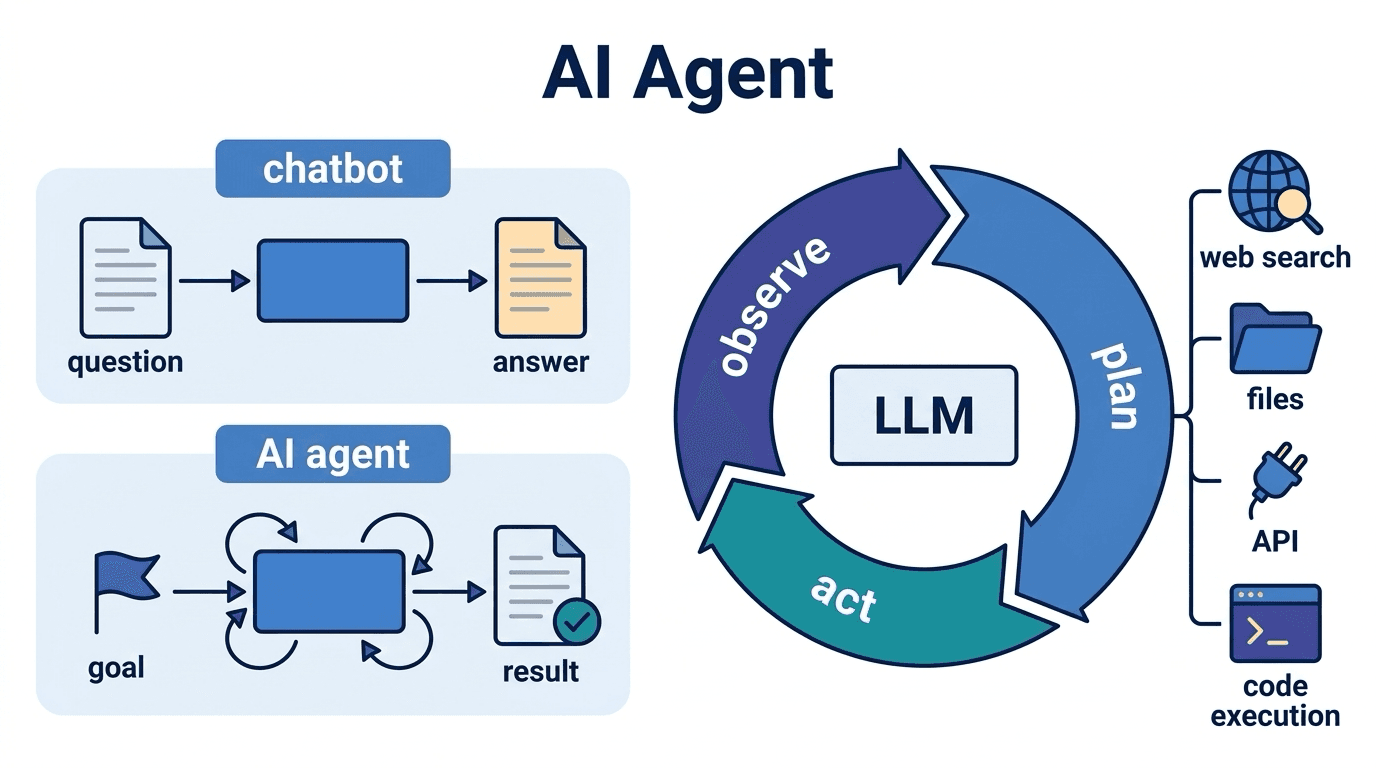
AI Agent
An AI agent is an AI system that autonomously formulates plans toward given goals and executes tasks
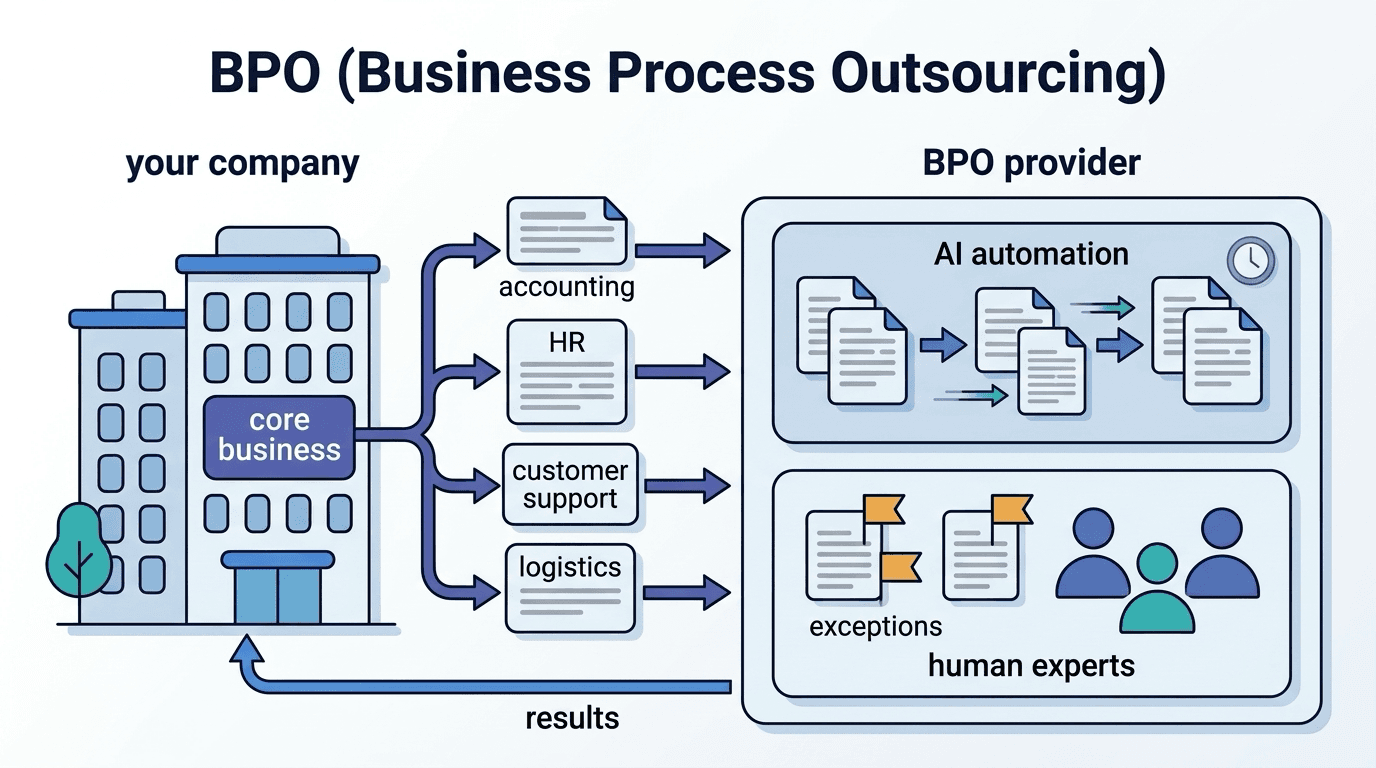
BPO (Business Process Outsourcing)
BPO refers to a form of outsourcing in which a company delegates specific business processes to an e
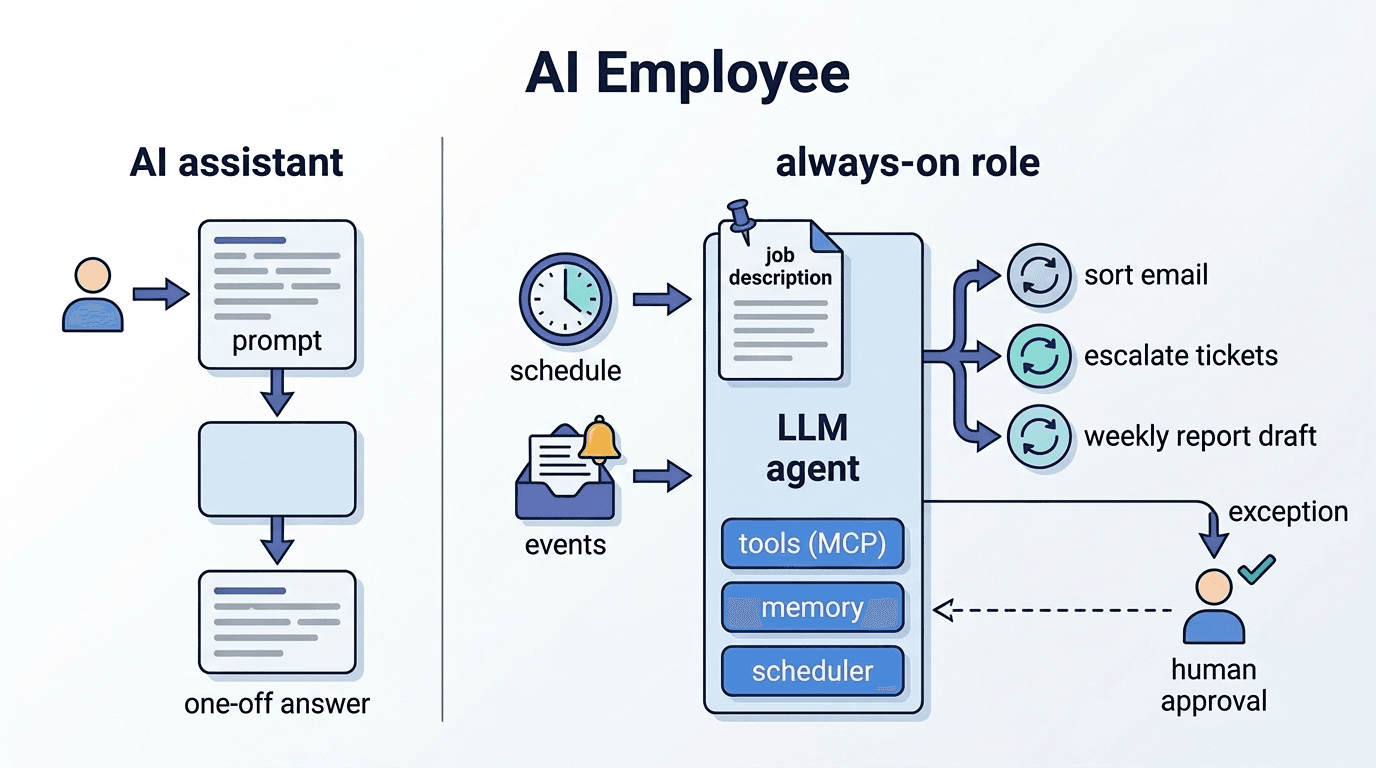
AI Employee (AI Employee)
An autonomous AI agent that takes on a specific business role and continuously performs tasks in the