What is Dynamic Prompt Routing? A Design for Optimally Selecting LLMs Based on Query

Lead
Dynamic prompt routing is a design pattern that automatically dispatches incoming queries to the optimal LLM or prompt at runtime, based on the content and characteristics of the input. Delegating everything to a single high-performance model means paying a high cost and incurring high latency even for simple questions, while relying solely on a smaller model results in poor quality on difficult tasks.
By inserting a routing layer, queries can be dispatched according to the rule "simple queries go to cheap, fast models; difficult queries go to high-performance models," enabling dynamic optimization of the cost-accuracy-speed tradeoff. This article is aimed at developers and architects who want to balance cost and quality in LLM applications, and provides a systematic explanation covering the differences between major routing strategies, evaluation criteria, implementation steps, and common design pitfalls to avoid.
Dynamic prompt routing is a mechanism for "selectively using" multiple models and prompts. We begin by understanding how it differs from static selection and what problem it is designed to solve.
Differences from Static Model Selection
Static model selection is an approach where the application is hardcoded so that "this endpoint always uses this model." The implementation is straightforward, but since all queries pass through the same model, even simple inquiries incur the cost of an expensive model, while specialized queries may exceed its capabilities.
With dynamic routing, each time a query arrives, the system first determines "which model and which prompt is optimal for this query" before executing it. For example, short FAQ-style questions are routed to a smaller model, while lengthy analyses or code generation tasks are sent to a high-performance model.
In a word, the difference is that static selection is "decided at design time," whereas dynamic routing "decides per query at runtime." Simply inserting this single judgment layer can significantly improve the balance between cost and quality while preserving the same functionality.
Three Challenges Routing Solves: Cost, Accuracy, and Speed
Routing aims to simultaneously optimize three metrics that tend to be in tension with one another.
- Cost: High-performance models have a high per-token price. By offloading the "simple tasks" that make up the majority of queries to cheaper models, the overall inference cost can be substantially reduced.
- Accuracy: Processing everything with a smaller model leads to failures on difficult problems. By routing only challenging queries to a high-performance model, average quality is maintained while unnecessary high costs are avoided.
- Speed: Smaller, lightweight models respond faster. Routing queries that only require a quick answer to faster models improves perceived latency.
The key point is that these three metrics exist in a tradeoff relationship and cannot all be satisfied simultaneously with a single model. Routing "selects the optimal point for each query," thereby shifting this tradeoff favorably across the system as a whole.
Relationship with Multi-Agent Systems
Routing also functions as the entry point for multi-agent architectures.
In a multi-agent system, multiple agents with different roles—such as a search agent, a coding agent, and a summarization agent—collaborate to complete tasks. In this context, routing plays the exact role of deciding "which agent to hand the query to first" and "which specialized model to forward it to next."
In other words, prompt routing is not merely a cost-reduction measure; it serves as the foundation for orchestrating and leveraging multiple specialized models. Starting small, it can be applied as "routing between two models," and as the system evolves, the same concept can be extended to "a dispatcher for numerous specialized agents." Conversely, if the routing layer is poorly designed, the overall accuracy and cost of the entire multi-agent system will be bottlenecked at that point.
Why LLM Routing Design Matters Now

The growing attention around routing is driven by the rapid proliferation of model options and cost pressures. This section outlines why routing design has become a practical concern today.
Diversification of Foundation Models and Cost Disparities
Available models now span a wide range, from high-performance flagship models to lightweight ones, with significant variation in both price and capability. It is not uncommon for the per-unit cost to differ by an order of magnitude depending on which model is chosen for the same task.
This combination of "abundance of choices" and "price disparity" creates the preconditions for routing. When model options were limited, there was little point in routing traffic between them. But now that models with varying performance and cost profiles exist in large numbers, selecting a model that is neither overkill nor underpowered for a given query has itself become an area for optimization.
For products with high token volumes in particular, the operational costs can differ substantially between an architecture that processes all queries through a flagship model and one that uses routing to offload queries to cheaper models. It is precisely because models have diversified that a layer to leverage that diversity has become necessary.
Reducing Inference Costs by Combining SLMs and LLMs
At the heart of cost reduction is the strategic use of SLMs (Small Language Models) alongside LLMs.
SLMs are compact, inexpensive, and fast, but tend to struggle with tasks requiring complex reasoning or broad knowledge. LLMs are the opposite — high quality, but prone to being costly and slow. When observing real-world query traffic, a significant proportion is often routine and repetitive, well within the capabilities of an SLM.
This is where a cascade architecture becomes effective: first attempt to handle the query with an SLM, and only escalate to an LLM when the confidence is low or the query is deemed too difficult. By handling the majority of traffic at the cheaper tier and reserving the high-cost tier for "only when truly necessary," costs can be reduced without significantly compromising quality. Running SLMs locally or at the edge can further reduce API costs.
Observability and Governance Requirements in Enterprise AI
In enterprise use, observability and governance become requirements in routing design alongside cost and accuracy.
Without the ability to record and track which queries were routed to which model, at what cost, and what output was returned, cost management, quality improvement, and incident response all become impossible. Since the routing layer is the checkpoint through which all requests pass, it is a natural place to collect logs, metrics, and traces.
Furthermore, when regulatory or policy constraints exist — such as "certain data cannot be sent to external APIs" or "this use case is restricted to approved models" — routing becomes the enforcement point for those constraints. Controls such as routing queries containing sensitive data exclusively to local models can be consolidated in a single location. The mechanism for cost optimization thus serves simultaneously as the implementation point for governance.
How to Compare Major Routing Strategies

Routing implementation approaches can be broadly divided into three categories. There is a trade-off between the sophistication of the decision-making and the implementation cost; the appropriate choice depends on the use case.
Rule-Based Routing: Keyword and Task Classification
The simplest approach is rule-based routing. Routing destinations are determined by conditions such as keyword matching, input length, and explicit task types (flags or metadata).
For example, you write branching logic in code so that queries containing "code" or "translation" are sent to a dedicated model, or queries exceeding a certain token count are sent to a long-context model. The advantage is that behavior is deterministic, easy to explain, and straightforward to debug. The decision overhead is also negligible.
The downside is that it handles variations in phrasing and unexpected queries poorly. For instance, "fix my bug" is code-related but doesn't contain the word "code," leading to missed classifications. The more rules you add, the heavier the maintenance burden becomes.
Even so, when use cases are limited and categories are clear-cut, starting with a rule-based approach is the standard practice. Simplicity translates directly into stability in production.
Embedding-Based Routing: Dynamic Selection via Semantic Similarity
The embedding-based approach vectorizes queries and routes them based on semantic similarity to pre-prepared category representative vectors.
Because it judges by meaning rather than keyword matching, both "fix my bug" and "my code isn't working" get routed to the same "code assistance" category. It handles variations in phrasing well and compensates for the gaps left by rule-based routing.
In implementation, you embed representative example sentences for each category and route the input query to the category with the highest embedding similarity. Since embedding computation can be performed quickly with a lightweight model, the added latency is minimal.
The caveats are that accuracy depends heavily on the quality of category design and representative examples, as well as the threshold configuration for similarity scores. If you don't decide in advance how to handle queries that aren't close to any category (e.g., a default destination or fallback), routing becomes unstable at the boundaries. A combined approach—using rules for clear-cut cases and embeddings for ambiguous ones—is also commonly used.
Meta-LLM Routing: Architecture Where a Separate Model Determines Routing
The most flexible approach is meta-LLM routing. A lightweight LLM is tasked with deciding "which model should handle this query," and routing is determined by its output.
The strength of this approach is that it can make holistic judgments that account for context and difficulty, without requiring humans to define classification axes in advance. It can also handle new types of queries to some extent without adding new rules.
On the other hand, since a model must be called once per decision, latency and cost are added to every request. If the routing model makes a wrong judgment, the query gets sent to the wrong destination, meaning the routing itself can become a source of errors. A fallback for unstable decisions is also necessary.
The standard practice is to use a cheap, fast model as the decision-maker and constrain its output to a strict format (such as enumerating model names). Since this approach trades overhead for intelligence, it should be adopted when routing difficulty is high and rule-based or embedding-based approaches cannot handle the load.
Comparison Table: Characteristics and Use Cases by Routing Strategy

Conclusion: Rule-based routing is suited for clear-cut query classification; embedding-based routing is suited when phrasing variation is high; meta-LLM routing is suited for complex routing where classification axes cannot be defined in advance. First, here is an overview in table form.
| Strategy | Decision Intelligence | Added Cost | Added Latency | Implementation Complexity | Best For |
|---|---|---|---|---|---|
| Rule-based | Low (deterministic) | Negligible | Negligible | Low | Clear, limited categories |
| Embedding-based | Medium (semantic judgment) | Small | Small | Medium | High phrasing variation |
| Meta-LLM | High (context-aware) | Medium–High | Medium–High | High | Complex routing that is difficult to define in advance |
The subsequent sections will take a deeper look at three dimensions (cost, latency, and accuracy) as well as implementation and maintenance considerations. There is no one-size-fits-all strategy; what matters is choosing an approach that is neither excessive nor insufficient for your requirements.
Three-Axis Evaluation: Cost, Latency, and Accuracy
Examining the three dimensions makes the character of each strategy clear.
Cost: Rule-based routing has virtually no cost for the decision itself. Embedding-based routing adds a small overhead for lightweight embedding computation. Meta-LLM routing is the most expensive, as it requires a model call for every decision. However, if routing accuracy improves and calls to high-cost models decrease, the total cost may actually end up lower.
Latency: Similarly, decision time increases in the order of rule-based < embedding-based < meta-LLM. That said, the "inference time of the destination model" tends to dominate over the "decision time for routing," so whether queries are being routed to the appropriate model often has a greater impact on perceived performance.
Accuracy: Routing accuracy tends to improve in the order of rule-based < embedding-based < meta-LLM, but meta-LLM also carries the risk of judgment errors. These three dimensions involve trade-offs, and the prerequisite is to measure and evaluate them empirically against your own query distribution.
Comparison of Implementation Complexity and Maintenance Costs
From an operational perspective, maintenance costs matter more than initial implementation.
Rule-based systems are easy to build, but rules must be added every time a new type of query appears. Once rules number in the dozens or hundreds, it becomes impossible to track "which condition is actually firing." Conflicting conditions also become common.
Embedding-based systems, once categories and representative examples are established, can automatically adapt to new expressions. However, when categories themselves need to be added or revised, representative examples must be redesigned and thresholds recalibrated.
Meta-LLMs offer flexibility since decision logic can be expressed in prompts, but if the model's behavior changes, so does the routing—making reproducibility and testing difficult.
In practice, a hybrid approach tends to strike the best balance with maintainability: keep the core structure deterministic with rule-based logic, and use embeddings or a meta-LLM only for the ambiguous parts.
Compatibility with RAG and Chain-of-Thought
Routing is used in combination with other techniques such as RAG and chain-of-thought (CoT).
Combining with RAG: Routing that determines "does this query require external knowledge?" and only triggers retrieval when necessary is highly effective. Running retrieval for every query is slow and costly, so only queries that need knowledge lookup are directed to the RAG path.
Combining with CoT: Applying step-by-step reasoning even to simple queries wastes time and drives up costs. It is effective to route only difficult queries to CoT (or a more powerful model) while letting simple ones be answered immediately.
In other words, routing acts as a switch that activates these heavyweight techniques "only when needed." Rather than keeping RAG and CoT always on, routing narrows the scope of their application, reducing average cost and latency while maintaining quality.
How to Proceed with Routing Design Implementation Steps

From here, the implementation process is broken down into three concrete steps: query classifier design, model assignment, and fallback. The guiding principle is to start small and grow incrementally through measurement.
Query Classifier Design and Training Data Collection
The heart of routing is the mechanism that classifies queries.
First, define the categories you want to route to (e.g., small talk, FAQ, code, long-form analysis, summarization). Next, collect actual query logs and build a dataset by classifying each query into its category. These "real queries from your own system" are paramount—samples constructed from imagination alone will diverge from the production distribution.
The classifier is implemented as conditional expressions for rule-based, category representative vectors for embedding-based, or a judgment prompt for meta-LLM. Regardless of approach, there is no need to aim for perfection from the start; beginning with only the primary categories is fine.
The collected data is also used to evaluate classifier accuracy. Prepare an evaluation set labeled with the "correct routing destination" and measure regularly how often the classifier gets it right. Since the query distribution in production shifts over time, log collection and re-evaluation should be built in as a continuous process.
Model Assignment Considering Context Window and Token Count
Even once categories are defined, the model to assign must be chosen not only by "capability" but also by "input and output size."
For long-form document analysis, the input simply will not fit unless the model has a sufficiently large context window. Conversely, for short conversations, a large context window is unnecessary, and speed and cost can be prioritized. The basic approach is to look at the number of input tokens in a query and route it to the smallest model capable of handling it.
Output length should also be considered. Routing tasks that require long generations to a model with slow output will degrade the perceived experience.
In practice, a two-stage decision process keeps things organized: (1) narrow down the "eligible models" based on input token count, then (2) from that set, choose the balance of performance and cost according to the difficulty of the category. Token count estimation should be done before the routing decision, and if the input is likely to exceed the limit, summarization or splitting should be applied first.
Incorporating Fallback and Circuit Breakers
In production, failures are inevitable — the target model may return errors, time out, or hit rate limits. Fallbacks and circuit breakers are what you use to prepare for these situations.
Fallback: When the primary model fails, automatically switch to an alternative. Set up a tiered escape route: if the high-performance model goes down, fall back to a different model; if an external API becomes unreachable, fall back to a local model.
Circuit breaker: When errors from a given model occur consecutively, stop sending requests to that model for a set period and wait for it to recover. This prevents continued requests to a downed target from worsening overall latency.
By incorporating these mechanisms into the routing layer, individual model failures can be prevented from directly causing a full service outage. This is especially important in edge and multi-provider configurations — a design philosophy of "degrade gracefully and keep running even if one goes down" is what underpins reliability.
Common Design Mistakes and How to Avoid Them

Finally, let's summarize the recurring failures in routing design and how to avoid them. The classic pitfall is becoming so focused on cost optimization that quality and safety are neglected.
Overconfidence in Routing Accuracy and Hallucination Risks
A common failure is over-trusting routing decisions.
Routing too many requests to cheaper models causes quality to degrade on queries that actually require a high-performance model, leading to more incorrect answers (hallucinations). When you push routing aggressively based on cost-reduction numbers alone, output quality silently deteriorates where you can't see it.
The mitigation is to measure both cost and quality. Continuously verify, using an evaluation set, how routing changes affect not just cost but also accuracy and satisfaction. Additionally, building in a mechanism to re-escalate low-confidence outputs to a higher-tier model allows you to maintain a quality floor even with aggressive routing.
Use "did we route cheaply and with sufficient quality?" as your metric, not just "did we route cheaply?" Without this perspective, cost reduction turns into quality degradation.
Lack of AI Guardrails and Prompt Injection Countermeasures
Another overlooked area is security. The routing layer is the checkpoint through which all inputs pass — there is every reason to use it as a place to apply attack countermeasures.
As a defense against prompt injection (an attack where malicious instructions embedded in input cause the model to malfunction), inspect inputs at the routing layer to detect and block dangerous patterns. Include a "safety check" as part of the routing decision criteria, and direct suspicious queries to a restricted path or outright rejection.
Also place guardrails on the output side — filters that inspect for inappropriate content or leakage of sensitive information — so that a consistent safety standard is applied regardless of which model handled the request.
When you focus exclusively on optimizing cost, accuracy, and speed, deferring this safety layer leaves risk exposed. It is preferable to incorporate guardrails as a standard feature of the same layer as routing from the moment you design the routing system.
Author & Supervisor

Yusuke Ishihara
Started programming at age 13 with MSX. After graduating from Musashi University, worked on large-scale system development including airline core systems and Japan's first Windows server hosting/VPS infrastructure. Co-founded Site Engine Inc. in 2008. Founded Unimon Inc. in 2010 and Enison Inc. in 2025, leading development of business systems, NLP, and platform solutions. Currently focuses on product development and AI/DX initiatives leveraging generative AI and large language models (LLMs).
Recommended Articles


Terms related to this article
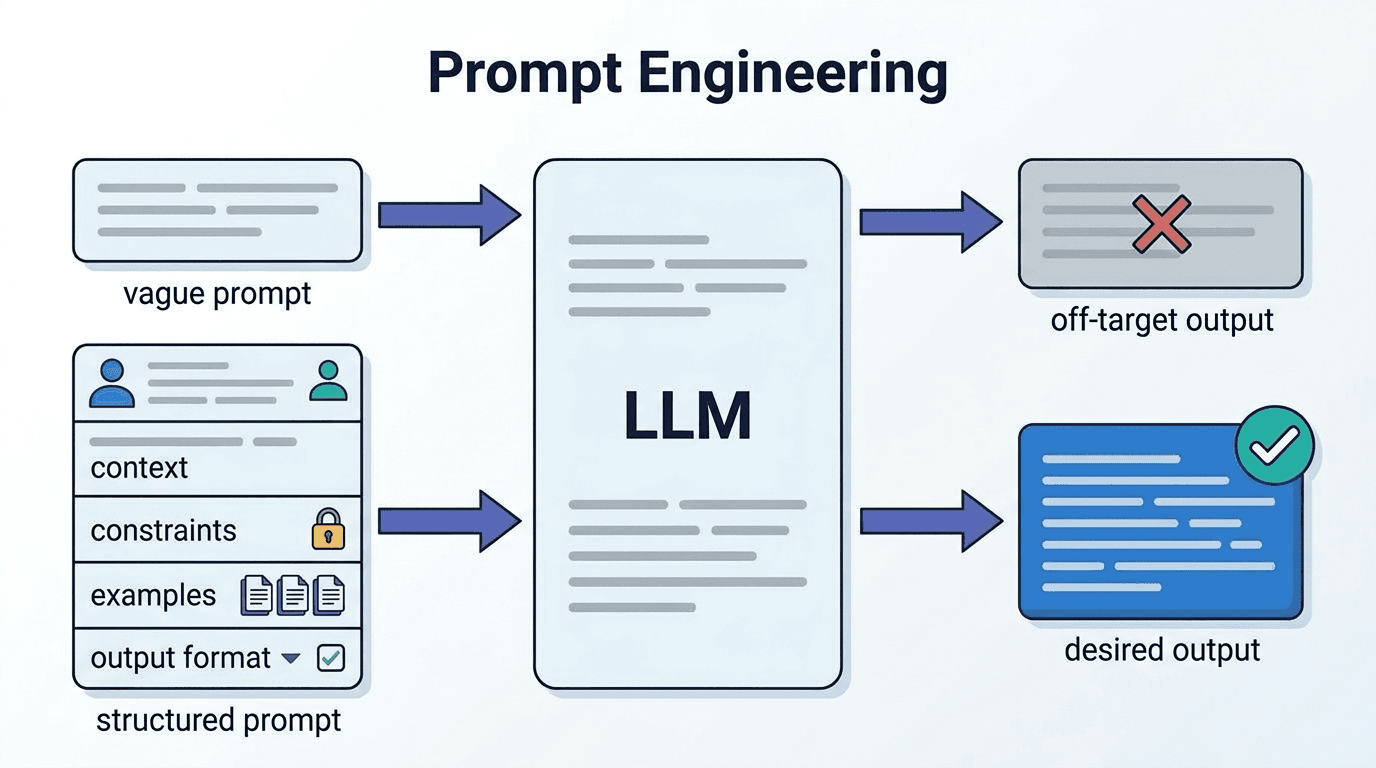
Prompt Engineering
Prompt engineering is the practice of designing the structure, phrasing, and context of input text (

System Prompt
A system prompt is an instruction given to an LLM before the start of a conversation with a user, de
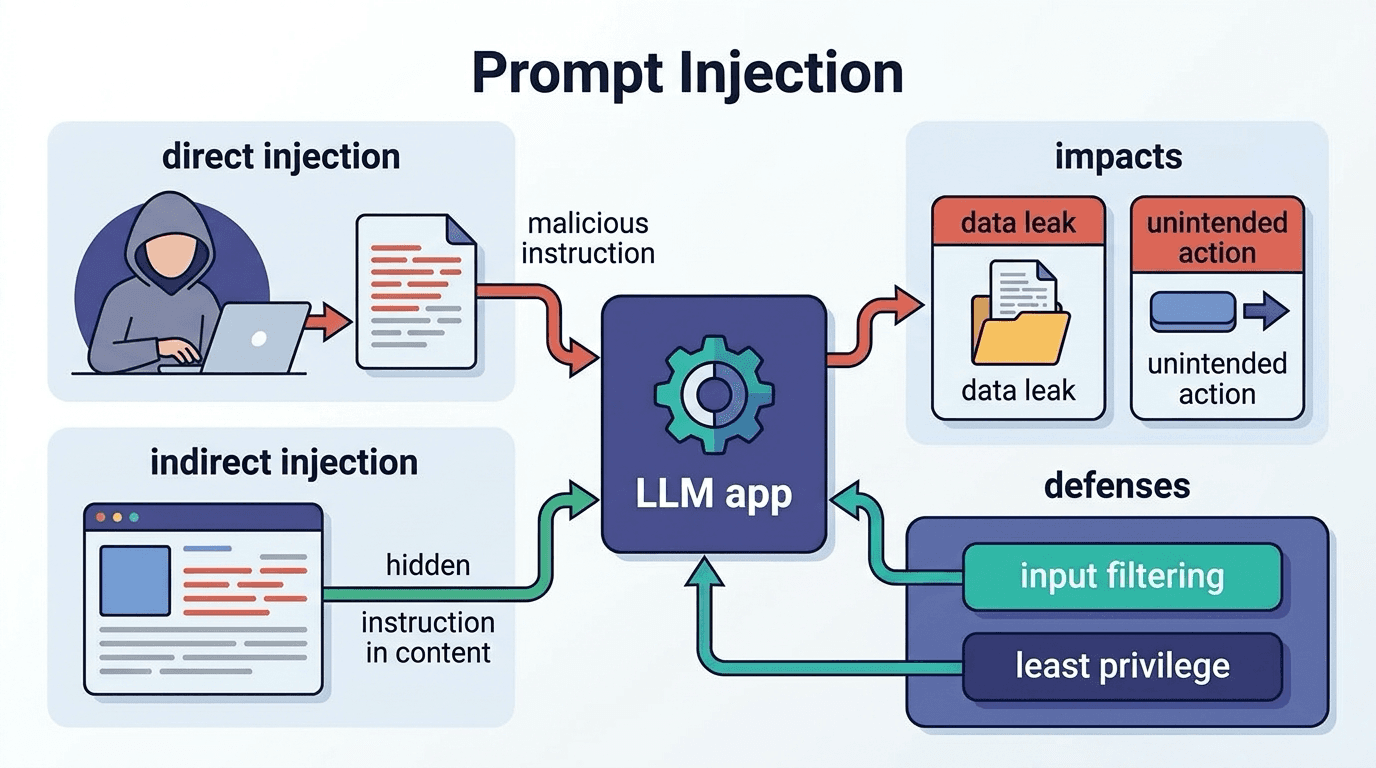
Prompt Injection
An attack technique that manipulates LLM behavior in unintended ways through malicious input. Classi